

How to Identify Pure Honey at Home – 7 Easy Methods That Actually Work

India is one of the largest consumers of honey in the world — yet studies suggest that more than 70% of honey sold in Indian markets is adulterated. From sugar syrups to artificial flavors, what sits in that golden jar on your kitchen shelf may not be honey at all.
For generations, honey has been a cornerstone of Indian kitchens and Ayurvedic medicine. But if the honey you’re consuming is fake, you’re getting zero benefits — just flavored sugar. So how do you know if your honey is pure?
Why Honey Adulteration Is a Serious Problem in India
Before we get into the tests, here’s what is commonly mixed into commercial honey in India:
- Sugar syrup — the most common adulterant, cheap and nearly tasteless
- Jaggery syrup — gives caramel-like color mimicking raw honey
- Corn syrup / rice syrup — used by large brands to increase volume
- High-fructose syrup — added to prevent crystallization and give a “premium” look
- Artificial flavors and colors — to mimic the aroma of natural honey
7 Easy Home Tests to Identify Pure Honey
The Water Test (Most Reliable)
What to do: Drop one teaspoon of honey into a glass of room-temperature water. Do not stir.
What to observe: Pure honey sinks to the bottom and forms a small lump. It dissolves slowly only when stirred. Adulterated honey dissolves immediately or forms a cloud in the water.
Why it works: Pure honey is dense with low moisture content. Sugar syrups are already partially hydrous and dissolve instantly.
The Thumb Test
What to do: Put a small drop of honey on your thumb. Observe for 30 seconds.
What to observe: Pure honey is thick and viscous — it stays on your thumb without spreading or dripping. Adulterated honey is runny and spreads quickly.
Why it works: Genuine raw honey has low water content (typically below 20%). Added syrups significantly reduce viscosity.
The Flame Test
What to do: Dip a matchstick into honey. Try to light it against a matchbox.
What to observe: Pure honey is flammable. If the matchstick catches fire and burns cleanly — the honey is likely pure. Adulterated honey won’t burn due to excess moisture.
⚠️ Safety note: Do this carefully, away from other flammable materials.
The Crystallization Test
What to observe: Leave your honey jar in a cool place for a few weeks. Pure raw honey will crystallize — turning thick, grainy, or completely solid.
Important: Crystallization is a completely natural process. It does NOT mean your honey is fake or has gone bad. Highly processed commercial honey is heat-treated to prevent this — but that heating destroys all its beneficial enzymes and antioxidants.
The Vinegar Test
What to do: Mix one tablespoon of honey with a small amount of water. Add 2–3 drops of white vinegar.
What to observe: If the mixture starts to foam or bubble excessively, it may contain chalk powder — a common adulterant used to increase weight.
The Blotting Paper Test
What to do: Put a few drops of honey on blotting paper or a paper towel.
What to observe: Pure honey will not be absorbed quickly — because of its low water content. Adulterated honey with added syrups will leave a wet stain and seep into the paper rapidly.
The Taste & Aroma Test
What to observe: Pure raw honey has a complex, layered taste — floral, earthy, slightly tangy, and sweet all at once. It leaves a mild tingling or warming sensation in the throat after swallowing. This comes from natural enzymes, pollen, and trace minerals.
Commercial or adulterated honey tastes uniformly sweet — no complexity, no aftertaste, no warmth in the throat.
Myths vs Facts About Pure Honey
“Clear, golden honey is always pure.”
Clarity is achieved by heating honey at high temperatures, which destroys enzymes and antioxidants. Raw honey is often cloudy and darker.
“If honey crystallizes, it has gone bad or is fake.”
Crystallization is a natural, desirable property of raw honey. It is a strong sign of purity. Simply warm gently to restore.
“Expensive supermarket honey is always pure.”
Price is not a guarantee. Many premium-branded honeys are heavily processed. Buy directly from beekeepers for true purity.
Why Raw Honey Crystallizes — The Science
Honey is a supersaturated solution of sugars — primarily glucose and fructose. Over time, especially in cool conditions (10°C–15°C), glucose molecules naturally separate and form crystals. This is not spoilage — it is chemistry.
FAQ — Honey Purity Questions Answered
Get 100% Pure, Farm-Fresh Honey
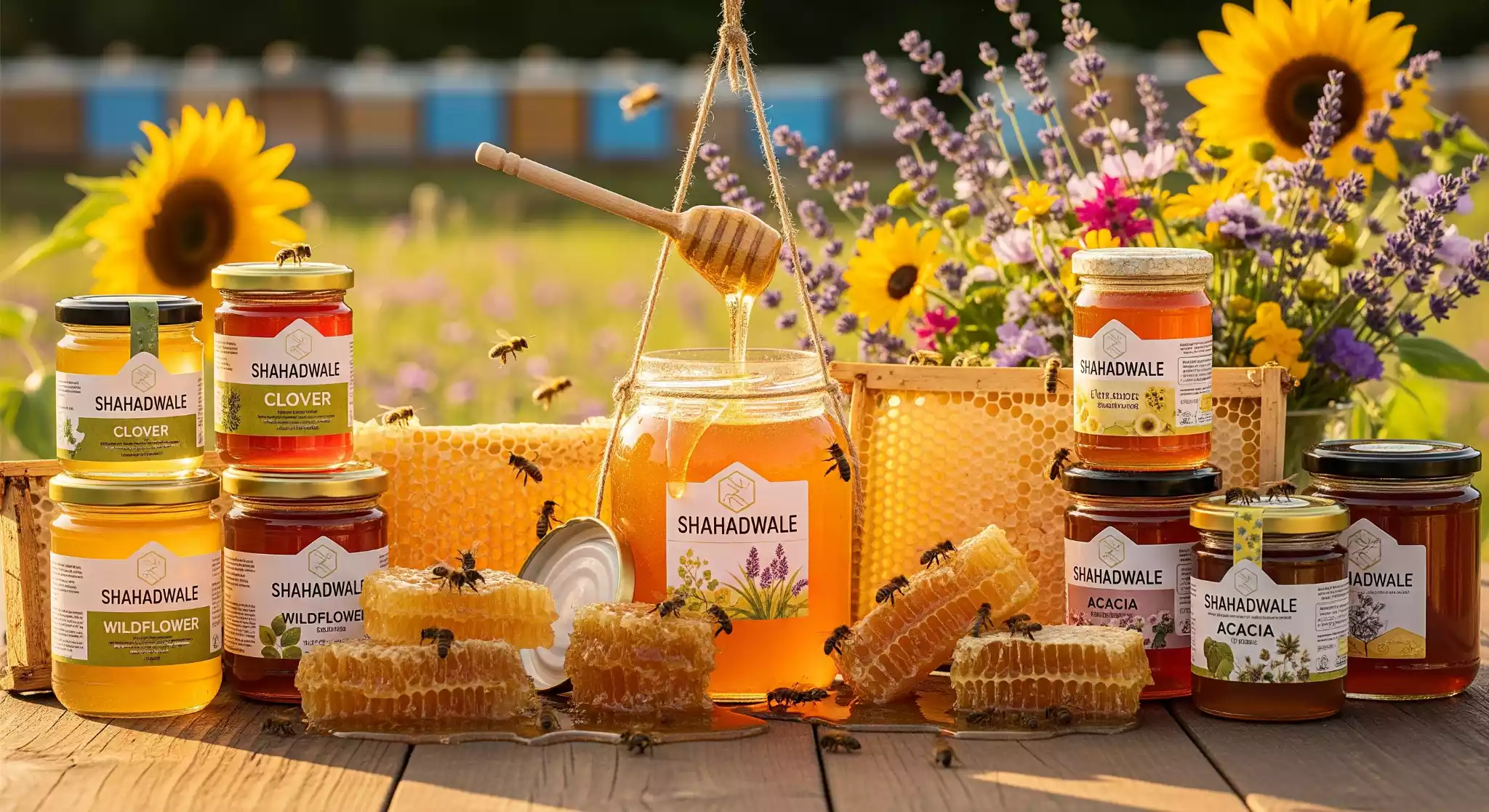
At SHAHADWALE, our honey is raw, unprocessed, unfiltered, and sourced directly from our own apiary in Rajasthan. Over 1,250 beehives. 3rd-generation beekeepers. Zero adulteration.