Written by the SHAHADwale Editorial Team · Reviewed for accuracy against WHO and FSSAI guidance · Updated July 2026 · ~11 min read
Opening Story
A friend of mine paid nearly three times the price of her usual supermarket honey last winter. She'd read somewhere that “raw” honey was the healthier choice, so she picked up a jar from a small stall at a weekend farmer's market — no label to speak of, just a handwritten price tag. A few weeks later she asked me, half-joking, half-serious: “Am I just paying for the word raw?”
It's a fair question. Honey aisles in India now stock dozens of jars, all claiming to be pure, natural, or raw. Some are. Many aren't. And the price difference alone tells you nothing. So what actually makes raw honey different? The short answer: it comes down to how much the honey is touched after it leaves the beehive. Everything else — the benefits, the texture, the taste, even whether it crystallises in your kitchen — follows from that one fact.
- What raw honey is: Honey extracted from the hive and lightly strained, without high heat or fine filtration, so it keeps its natural enzymes, pollen, and antioxidants.
- Biggest benefits: Richer antioxidant content, natural enzyme activity, a soothing effect on a sore throat, and a more complex, floral-source-driven flavour.
- Who should use it: Healthy adults and children over one year, home cooks, tea drinkers, and people who prefer minimally processed foods.
- Who should avoid it: Infants under 12 months, anyone with a diagnosed pollen or bee-product allergy, and people with diabetes (only with medical guidance).
- Buying tip: Look past the word “raw.” Check for an FSSAI licence number, a batch number, and an actual floral source.
Why More People Are Choosing Raw Honey
Something has shifted in how Indian households buy pantry staples. A decade ago, honey was mostly bought for the tea shelf and forgotten the rest of the year. Now it shows up in fitness routines, skincare drawers, and even school lunchboxes.
Part of this is simple awareness — people read ingredient labels now in a way they didn't before. Part of it is a broader shift toward minimally processed food: the same instinct that pushes someone toward cold-pressed oil or stone-ground flour applies here. And part of it is a demand for transparency — buyers want to know which flowers the bees visited, which season the honey was harvested in, whether it was heated, and how it was filtered. None of this means raw honey is a miracle food. It means people are asking better questions before they buy, which is exactly the right instinct.
What Makes Raw Honey Different?
Think of honey production as a spectrum, not a binary. On one end sits honey straight from the comb. On the other sits the heavily heated, ultra-filtered honey sold in squeeze bottles. Raw honey sits much closer to the first end.
| Stage | Raw Honey | Regular Processed Honey |
|---|---|---|
| Extraction | Extracted from the comb, minimally handled | Extracted, then blended across large batches |
| Filtration | Coarse straining only, removes wax and debris | Fine filtration, often removes pollen entirely |
| Heating | Not heated above hive temperature (~35–40°C) | Often pasteurised at high heat for shelf stability |
| Enzymes | Natural enzymes like diastase remain active | Enzymes largely destroyed by heat |
| Pollen | Retains natural pollen content | Frequently stripped out during ultra-filtration |
| Crystallisation | Crystallises naturally over time | Often stays liquid longer due to processing |
The heating step matters more than most people realise. Honey doesn't need to be cooked to be safe — bacteria can't survive in it anyway, thanks to its low moisture and acidity. Heating is mostly done to make honey look clearer and pour more easily off a factory line. It's a cosmetic and logistical choice, not a safety one. For a wider look at regional varieties, see our guide to types of honey in India.
What's Actually Inside Raw Honey?
| Nutrient (per 21g / 1 tbsp, approx.) | Amount |
|---|---|
| Calories | ~64 kcal |
| Carbohydrates | ~17g |
| Sugars (natural) | ~17g (fructose ~9g, glucose ~7.5g) |
| Protein / Fat | Trace / 0g |
| Vitamin C, B-vitamins | Trace amounts |
| Minerals (potassium, calcium, iron) | Trace amounts |
Values vary by floral source and season — this is an average, not a guarantee for every jar.
| Natural Compound | What It Is | Why It's Talked About |
|---|---|---|
| Diastase (enzyme) | A natural enzyme from bees | Used by labs as a marker of “how raw” the honey is |
| Flavonoids | Plant-based antioxidant compounds | Linked to honey's antioxidant activity |
| Phenolic acids | Antioxidant compounds from nectar | Contribute to colour and antioxidant strength |
| Pollen grains | Microscopic plant pollen | Used to trace floral and geographic origin |
| Hydrogen peroxide (trace) | Formed naturally during enzyme activity | Partly behind honey's mild antibacterial reputation |
In simple English: raw honey isn't just sugar water. It carries small amounts of compounds that give it colour, aroma, and some functional properties — even if the quantities are modest compared to, say, a multivitamin.
Science Says…
Let's be precise about what research actually shows — not what marketing copy claims. As our editorial team likes to put it: “Minimal processing doesn't automatically make a honey healthier in every single way, but it does preserve characteristics that many consumers genuinely value.”
Antioxidants. Honey, particularly darker varieties, contains flavonoids and phenolic compounds with measurable antioxidant activity in lab settings. A spoonful contributes a small amount to your diet, alongside fruits and vegetables. Limitation: most antioxidant studies are lab-based, not long-term human trials.
Natural enzymes. Raw honey retains enzymes like diastase and invertase that are largely destroyed by high heat. These are markers of minimal processing rather than a direct health “boost.” Limitation: enzyme presence doesn't automatically translate into a proven digestive benefit once honey passes through stomach acid.
Energy. Honey's mix of glucose and fructose makes it one of the quicker-absorbing natural sugars around — which is why it's turned up in pre-workout routines for decades. Worth remembering: it's still sugar, and should be counted within your daily intake.
Sore throat. Honey has reasonably strong evidence — including reviews cited by health bodies like the WHO — for soothing cough and throat irritation, in some studies performing comparably to over-the-counter cough syrups for short-term relief. A spoon of honey, plain or in warm (not boiling) water, is a genuinely useful home remedy. Limitation: not a substitute for medical treatment when symptoms are severe or accompanied by fever.
Skin care. Topical honey has a real research trail — mostly in clinical settings using medical-grade varieties. A DIY face mask with raw honey might offer mild hydration, but it isn't the same as clinically tested medical-grade honey.
Immune support. Honey's antibacterial and antioxidant properties are well documented in lab research — but that's a long way from “a spoon a day keeps illness away.” Think of honey as a supportive habit, not a switch you flip. No credible study shows honey alone prevents illness or replaces medical treatment.
Fitness & weight. Honey can fit into a pre- or post-workout snack for quick-digesting carbs, but offers no unique advantage over dates or bananas. Evidence for honey directly aiding weight loss is weak and inconsistent — it shouldn't be thought of as a “weight-loss food.” For the fuller picture, see our guide on honey for weight loss.
Common Mistakes People Make
- Buying a jar labelled “raw honey” without checking anything else on the packaging.
- Believing crystallised honey has gone bad or been faked — it hasn't; crystallisation is often a sign of minimal processing.
- Judging honey purely by colour. Colour depends on floral source, not purity.
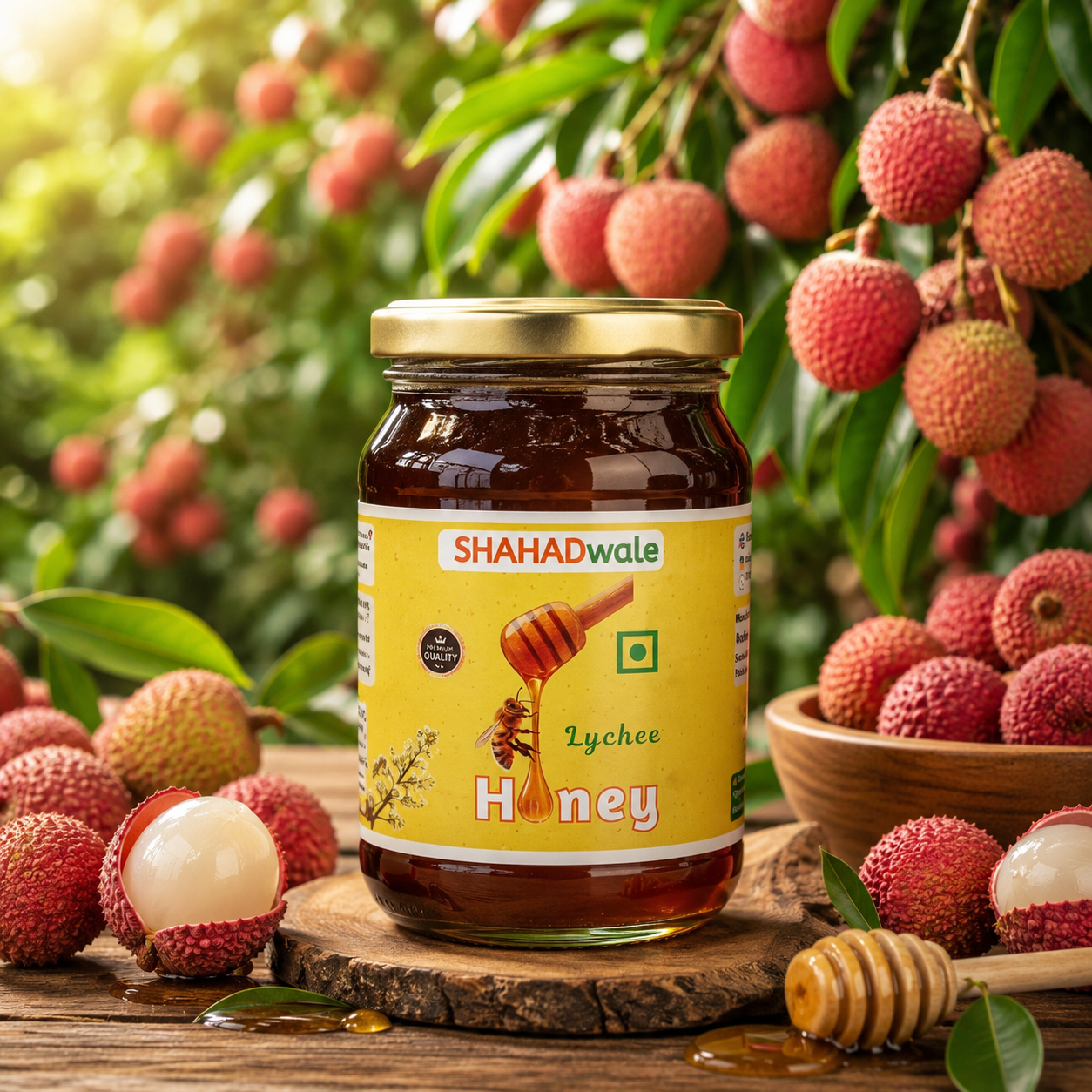
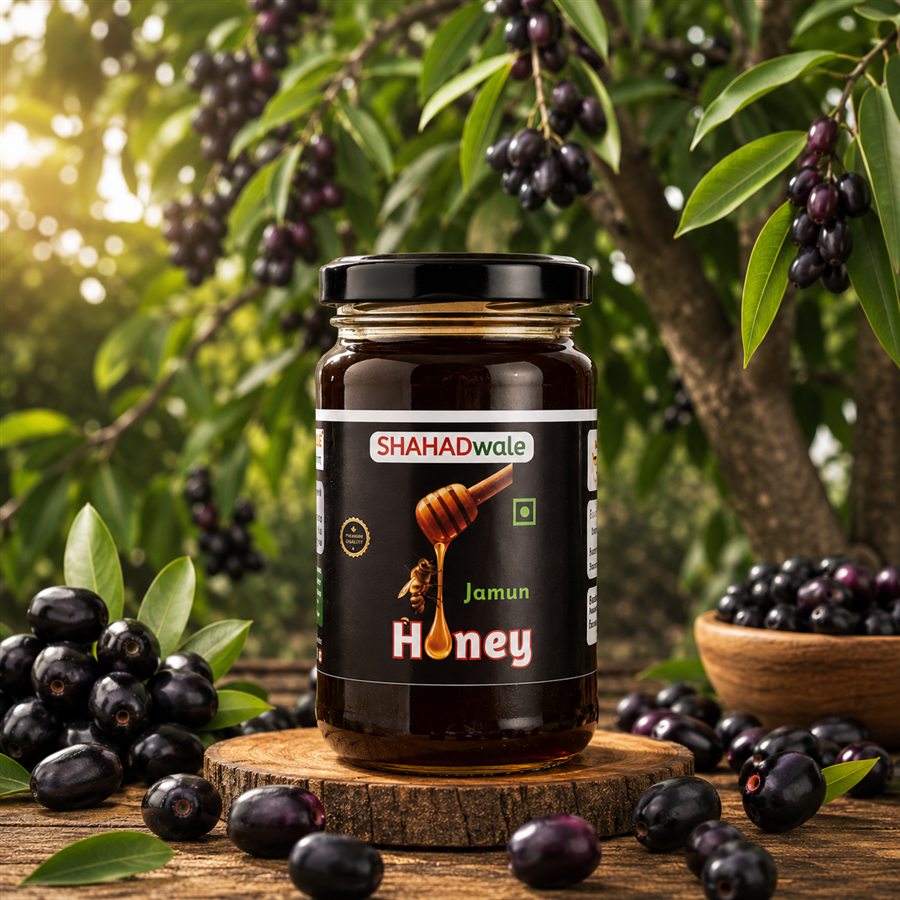
- Ignoring the floral source. Mustard honey from North India, litchi from Bihar, and eucalyptus/jamun from parts of South India each taste and behave differently.
- Assuming a higher price automatically means better quality, without checking FSSAI details or batch traceability.
Myth vs Reality
| Myth | Reality |
|---|---|
| Raw honey never crystallises | Raw honey often crystallises faster than processed honey — it's tied to glucose content, not a defect |
| All raw honey is organic | Raw and organic are separate certifications (processing vs farming practice) |
| Raw honey cures diseases | It may support minor wellness habits, not treat disease |
| Honey never expires, so storage doesn't matter | Honey is shelf-stable but flavour and quality degrade with poor storage |
| Darker honey is always purer | Colour is determined by floral source; light honey can be just as pure |
| Raw honey is safe for babies | Never give raw honey to infants under 12 months (infant botulism risk) |
How Different People Use Raw Honey
- Office workers stir it into mid-morning tea or coffee as a lighter alternative to refined sugar.
- Gym users take small measured amounts before a workout for quick energy.
- Tea lovers add it right at the end so the heat doesn't overwhelm the flavour.
- Parents (children over one year) use it for a scratchy throat, alongside warm fluids and rest.
- Home cooks use it in dressings, marinades, and baking for deeper flavour.
- Ayurveda users follow traditional pairings — honey with warm water or herbs — generally avoiding direct heating.
Raw Honey vs Regular Honey
| Parameter | Raw Honey | Regular Honey |
|---|---|---|
| Processing | Minimal — strained only | Heated and finely filtered |
| Pollen content | Retained | Often removed |
| Enzyme activity | High | Low to none |
| Texture | Thicker, crystallises naturally | Stays liquid longer |
| Flavour complexity | Reflects floral source strongly | Often more neutral, blended |
| Price | Usually higher | Usually lower |
| Best for | Natural-food enthusiasts, home remedies | Everyday casual use, baking at scale |
Not sure a jar is genuinely raw? Our guide on how to identify pure honey walks through the label checks that matter.
Before You Buy — Shopping Checklist
- FSSAI number clearly printed — a legal requirement in India.
- Ingredient list that says only “honey,” with no added sugar or syrup.
- Batch number so the jar can be traced back to a specific harvest.
- Floral source named — mustard, litchi, jamun, multiflora, or similar.
- Harvest information, even something as simple as the season or year.
- Packaging that protects from light and air — dark glass beats clear plastic.
- Traceability & brand transparency — clear communication about sourcing and processing.
Is Raw Honey Right For Everyone?
Infants below 12 months should never be given raw honey. It can contain dormant Clostridium botulinum spores that an adult gut handles easily but an infant's immature digestive system cannot. People with pollen allergies should be cautious, since raw honey retains trace pollen. People with diabetes can technically consume honey, but it raises blood sugar similarly to other sugars and should be counted within overall carbohydrate intake, ideally with medical guidance. For most healthy adults and children over one, moderate raw honey fits comfortably into a balanced diet.
Storage Tips
Do: store in a cool, dry place away from sunlight; use a clean, dry spoon every time; keep the lid tightly closed.
Don't: refrigerate raw honey (it speeds up crystallisation); store near a stove; use a wet spoon (moisture can encourage fermentation).
Shelf life: properly stored raw honey lasts well beyond a year, though flavour and enzyme activity are best within the first 12–18 months.
Expert Buying Advice
If you're buying raw honey for the first time, start small. A 250g jar is enough to judge taste, texture, and how it behaves in your kitchen before committing to a larger size. Look for brands that are upfront about their sourcing rather than ones that rely purely on the word “raw.” As an example, SHAHADwale lists floral source and batch details on its packaging — the kind of transparency worth looking for regardless of which brand you eventually choose. Ultimately, the best jar is the one where you can trace the honey back to an actual harvest, an actual region, and an actual process — not just a label.
Frequently Asked Questions
1. Does raw honey go bad?
Not really. Properly stored raw honey rarely spoils, though it may crystallise or darken slightly over time — neither means it's gone off.
2. Can I take raw honey on an empty stomach?
Yes, many people do, usually mixed with warm water — though there's no strict clinical rule that it has to be taken this way.
3. Is raw honey good for acidity?
Some people find it soothing in small amounts, but it isn't a clinically proven treatment for acid reflux.
4. How much raw honey should I eat per day?
A common guideline is 1–2 tablespoons a day for adults, kept within your overall sugar intake.
5. Can diabetics eat raw honey?
In small, monitored amounts, yes — but discuss it with a doctor first, since it still affects blood sugar.
6. Why does raw honey turn solid?
It's the glucose-to-water ratio. Completely normal, and reversible with a little warm water.
7. Is raw honey vegan?
No. It's produced by bees, so most vegan definitions exclude it.
8. What is the best time to eat raw honey?
Morning on an empty stomach, or at night for a sore throat, are both popular. Neither is scientifically mandated.
9. Can raw honey help with allergies?
The idea that local honey builds tolerance to local pollen is popular, but not strongly backed by clinical research yet.
10. Is raw honey safe during pregnancy?
Generally yes, in moderate amounts — though it's worth a quick check with your doctor for your situation.
11. Does heating raw honey destroy its benefits?
Heat above a certain point reduces enzyme activity. Stir it in after cooking, not during — into tea after it's boiled, not into the pot.
12. What's the difference between raw honey and Manuka honey?
Manuka is a specific raw honey variety from New Zealand and Australia, known for higher MGO levels and often used in medical-grade wound care.
13. Can I give raw honey to my toddler?
Yes, once they're past 12 months old.
14. Does raw honey help with weight loss?
Not directly. It's better understood as a sugar substitute than a weight-loss aid.
15. How can I tell if raw honey is pure?
Check for FSSAI certification, a named floral source, and batch traceability, and watch for natural crystallisation. None alone is proof — together they're a reasonably good signal. Lab testing remains the only definitive confirmation.
Final Takeaway
- Raw honey is defined by minimal processing, not marketing language — check the label, not just the word “raw.”
- Its real benefits are modest but genuine: antioxidants, natural enzymes, and solid evidence for soothing a sore throat.
- Crystallisation is normal and often a sign of authenticity, not spoilage.
- It isn't suitable for infants under 12 months and needs caution for those with pollen allergies or diabetes.
- The best jar is the one you can trace back to an actual harvest, floral source, and transparent brand.
Explore the SHAHADwale Honey Collection →
References
- World Health Organization (WHO) — guidance on honey for cough and throat symptom relief
- FSSAI (Food Safety and Standards Authority of India) — labelling and licensing requirements for packaged honey
- National Bee Board of India — apiculture and honey production standards
- APEDA — honey quality and export standards
- General clinical literature on topical/medical-grade honey (e.g., Manuka) for wound care
This article is for general consumer education and does not constitute medical advice. For specific health concerns, consult a qualified healthcare professional. Honey should never be given to infants under 12 months.