Written by the SHAHADwale Editorial Team · Reviewed for food-safety accuracy by a food quality consultant · Last updated: July 2026 · 14 min read
You're standing in the honey aisle, holding two jars. One says “100% Pure.” The other says “Natural.” Both look identical — same golden colour, same thick pour, same reassuring label design. At first glance, you'd never know one of them might just be glucose syrup with a bee printed on the label.
This happens more often than it should. In 2020, a well-known Indian environmental watchdog tested honey from major national brands and found that a large share of samples failed advanced adulteration tests — even though every jar carried an FSSAI license number. That single investigation changed how Indian consumers think about honey, and rightly so.
What Does Pure Honey Actually Mean?
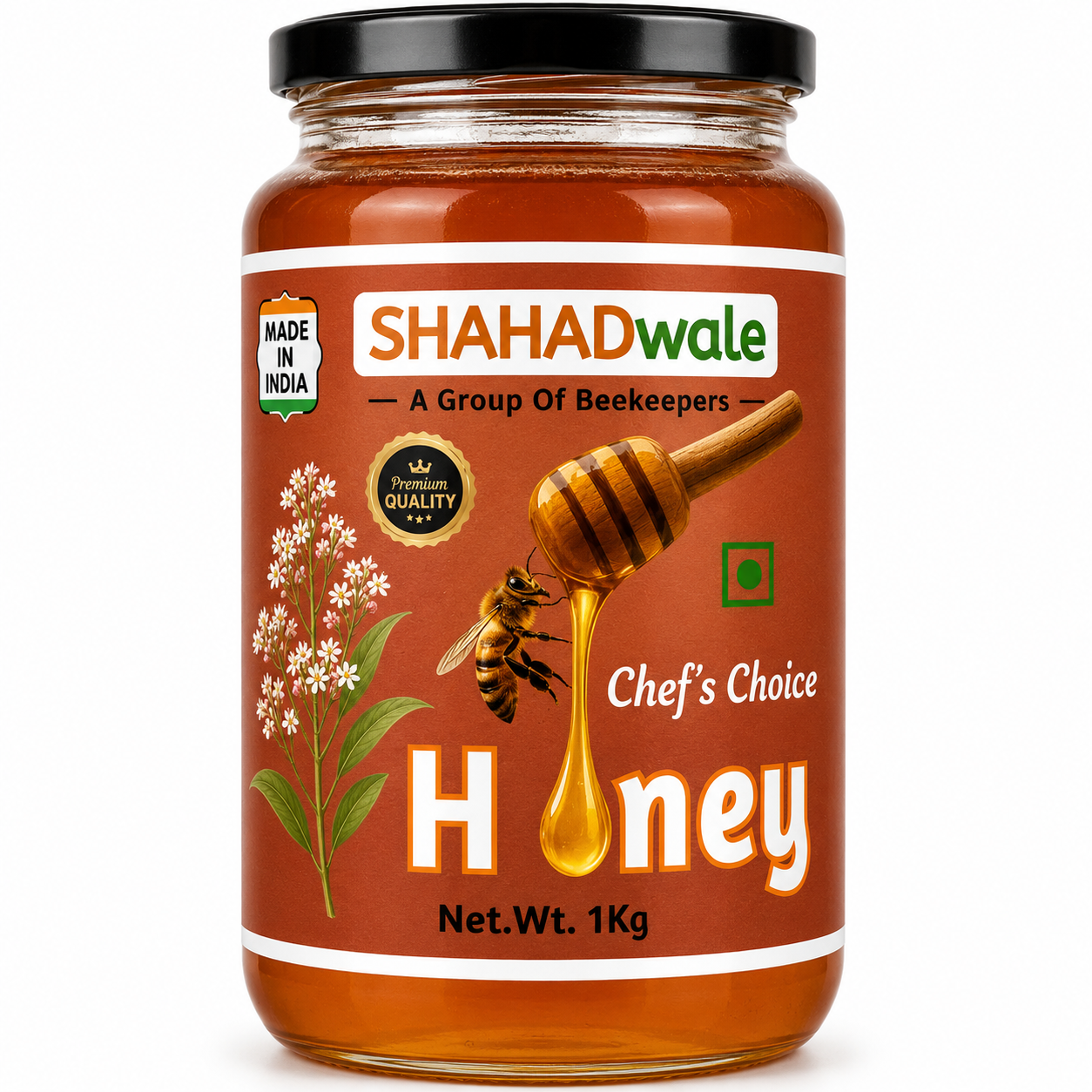
Pure honey is honey with nothing else in it. No added sugar, no corn syrup, no rice syrup, no artificial colour, no water dilution beyond what the bees themselves put in. That's really it — nectar, converted by bees, nothing added by a factory.
The confusion starts because words like “natural,” “organic,” and “pure” get used loosely on packaging, and shoppers assume they all mean roughly the same thing. They don't.
- Pure honey means unadulterated — no foreign sugars or substances added.
- Raw honey means it hasn't been heated above natural hive temperature or finely filtered, so it retains pollen, enzymes, and sometimes visible wax particles.
- Natural honey is a marketing term more than a legal one, though it generally implies minimal processing.
- Organic honey relates to how the bees were kept — hive management, chemical use around the apiary, forage sources — not just the honey itself.
Here's where most people get tripped up: you can have honey that's pure but not raw (heated and filtered, still 100% honey), or raw but technically not organic (bees foraged in an uncertified area). A jar can honestly claim “natural” on the front and still fail a purity test, because “natural” was never a promise about what's inside — only about how little it was touched.
Why Pure Honey Matters
Adulterated honey isn't just a labelling technicality. It's a food safety and consumer trust issue that apiculture experts, food scientists, and regulators in India have been actively fighting for years.
Indian beekeepers have raised repeated concerns that cheap sugar syrups — often derived from rice, corn, or beet — get blended into honey because they're significantly cheaper than sourcing honey from actual bee farms. A factory can produce flavoured syrup on demand, year-round, at a fraction of the cost of maintaining hives across flowering seasons. Honest producers simply can't compete on price against that.
For consumers, the stakes are simpler. If you're buying honey for its trace enzymes, antioxidants, and minerals, syrup-diluted honey gives you almost none of that — just sugar water with flavouring and colour. The National Bee Board and organisations under India's apiculture development programs have pushed for stronger scientific testing precisely because adulteration threatens the livelihood of small and medium beekeepers.
Pure Honey vs Fake Honey
| Factor | Pure Honey | Fake / Adulterated Honey |
|---|---|---|
| Ingredients | Honey only | Honey blended with sugar syrup, or 100% syrup |
| Source | Traceable to bee farms or apiaries | Often untraceable, factory-blended |
| Crystallization | Happens naturally over weeks or months | May stay liquid indefinitely, or crystallize unnaturally fast |
| Taste | Complex, floral, varies by season and source | Often flat, overly sweet, one-dimensional |
| Label | Batch number, FSSAI code, floral source listed | Vague terms, no batch traceability |
| Testing | Passes NMR / isotope ratio testing | Fails advanced lab testing for foreign sugars |
| Price | Reflects real cost of beekeeping and extraction | Unusually cheap for the volume offered |
None of this is something you can spot instantly under kitchen lighting. That's the uncomfortable part — and it's what the rest of this guide deals with.
Signs of Pure Honey
No single clue proves purity on its own. But a combination of the following signals gives you a genuinely useful picture — and a few of them matter far more than others.
The ingredient list matters most, so start there. Turn the jar around. If the panel says “Honey” and nothing else, that's a good sign. If you spot glucose syrup, invert sugar syrup, or corn syrup anywhere on that list, it's no longer pure honey — no matter what the front of the jar promises in large friendly letters.
Colour trips up a lot of first-time buyers. Honey ranges naturally from almost water-white to dark amber depending on the flowers involved — mustard honey runs light golden, forest and multiflora honey run darker. But colour alone tells you about floral source, not purity. A syrup blend can be tinted to match whatever shade shoppers expect.
Crystallization: the most misunderstood sign of all
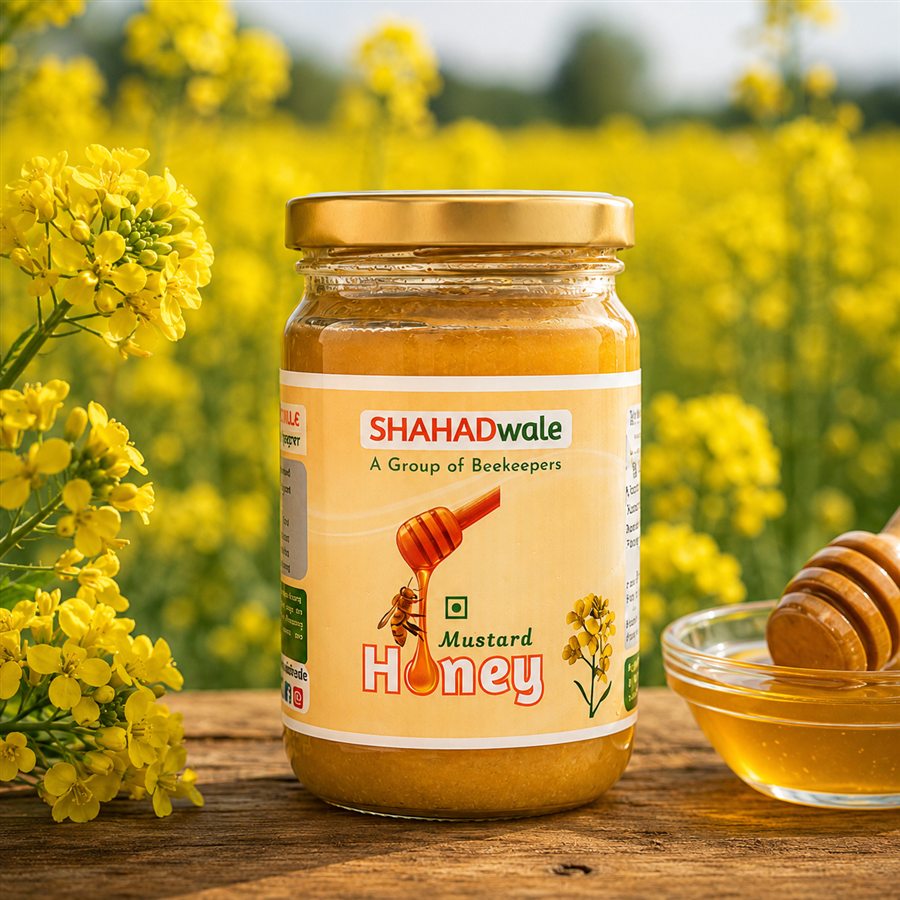
Crystallization is a natural process, not a defect. Honey with higher glucose content (mustard, for instance) crystallizes faster than honey with more fructose (like acacia). Crystallized honey is still perfectly good honey — a gentle warm-water bath returns it to liquid form without damaging it.
Beekeepers often say this is the single biggest misconception they run into. Customers assume a grainy jar has gone bad, when in reality it's usually a sign of minimal processing. Some manufacturers add anti-crystallization agents purely so the product looks “perfect” on the shelf indefinitely — which, ironically, makes a jar that never crystallizes worth a second look rather than automatic reassurance. If you're curious what this minimal processing actually does for you nutritionally, our guide to raw honey benefits breaks it down.
Aroma and taste
Real honey carries a distinct floral or earthy scent tied to its source flowers. Mustard honey smells noticeably sharper than litchi, and acacia barely smells like anything beyond faint sweetness. Heavily processed or syrup-blended honey tends to smell flat, because high heat and filtration strip out the volatile aromatic compounds that give honey its character. Taste follows the same logic: pure honey has layered sweetness that shifts depending on the flower source, while adulterated honey usually tastes like straightforward sugar dissolved in water — sweet, flat, forgettable.
The label details that actually carry weight
- Seasonality. Beekeeping is seasonal. A brand selling every floral variety, every month, in unlimited quantity is worth questioning — nature doesn't work on that schedule.
- Packaging. Tamper-evident seals and properly printed batch codes, not a smudged sticker added as an afterthought.
- Batch number. How a jar gets traced back to its production run. Its presence is a real trust signal.
- FSSAI licence. Every legally sold food product in India needs a licence number printed on the pack, and you can verify it on FSSAI's official portal.
- Harvest information. Good brands tell you roughly when and where the honey was harvested — season, region, sometimes the specific apiary cluster.
- Traceability. Can the brand show the journey from bee farm to jar? Brands willing to publish this openly are generally the safer bet.
Common Home Honey Tests (and Why They Fail)
Search “how to identify pure honey” anywhere online and you'll run into the same handful of kitchen tricks. Here's the honest picture on each one.
| Home Test | What People Believe | Scientific Reality |
|---|---|---|
| Water Test | Pure honey sinks, fake dissolves | Unreliable — depends on temperature, water, technique |
| Thumb Test | Pure honey doesn't spread | Depends on moisture and room temperature, not purity |
| Flame / Matchstick Test | Pure honey burns easily | No scientific basis; also a fire hazard |
| Vinegar Test | Foaming reveals adulterants | Designed for different adulterants; doesn't detect syrup blending |
| Crystallization Check | Fast crystallizing = pure | Crystallization speed depends on sugar ratio, not purity |
None of these can detect what actually matters today — syrup blending using rice, corn, or beet-derived sugars engineered specifically to mimic honey's sugar profile. Catching that requires laboratory instruments, not kitchen items. The only genuinely reliable way to confirm honey purity is accredited laboratory testing.
How Honey Is Tested Professionally
NMR testing works by reading the molecular “fingerprint” of a honey sample. Every honey has a characteristic pattern of sugars, acids, and other compounds tied to its floral and geographic origin. A lab runs the sample through an NMR spectrometer and compares that fingerprint against a large reference database of authentic honeys. If it shows sugar patterns typical of rice syrup, the software flags it. FSSAI has moved to mandate NMR-based screening for honey meant for export, and accredited testing has expanded — though it still isn't a universal requirement for every domestic batch.
The C4 sugar test, also called isotope ratio testing, is older. Plants like sugarcane and corn use a different photosynthesis pathway (C4) than the flowering plants bees forage on, leaving a distinct carbon-isotope signature. The catch: it doesn't reliably catch syrups made from C3 plants — rice, wheat, beet — which is exactly why more advanced testing like NMR and the Specific Marker for Rice syrup (SMR) test became necessary.
Put together, FSSAI's standards cover moisture content, sugar composition, enzyme activity, and permissible adulterant markers. The honest takeaway: even regulatory testing is a moving target, because adulteration techniques keep adapting. That's exactly why brand transparency and traceability matter as much as any single lab report.
How to Buy Pure Honey Online
Buying honey online removes your ability to smell, taste, or feel the texture before purchase. So the checklist shifts toward information you can actually verify on-screen. Brand transparency comes first: does the seller explain where the honey comes from — which regions, which seasons? Certifications matter next: a valid FSSAI number you can cross-check. Reviews are worth reading properly too — for mentions of taste consistency and crystallization behaviour across multiple purchases. If you'd rather skip the research and start from a shortlist, our roundup of the best honey in India applies this same checklist to specific brands.
| Buying Checklist | What to Look For |
|---|---|
| FSSAI Number | Present, legible, verifiable on FSSAI's portal |
| Ingredient List | Only “honey” — nothing else |
| Floral Source | Clearly named (mustard, litchi, forest, acacia, multiflora) |
| Batch Number | Printed clearly on the pack |
| Harvest Info | Season and region mentioned |
| Brand Story | Specific, not generic marketing language |
| Reviews | Consistent feedback across multiple buyers |
| Price | Reasonable for the volume, not suspiciously cheap |
Common Buying Mistakes
- Judging purity by price alone. Cheap honey deserves scrutiny, but expensive honey isn't automatically pure either.
- Trusting the front label without checking the back. “100% Pure” means nothing if the ingredient panel tells a different story.
- Assuming crystallized honey is fake or spoiled. Crystallization usually signals minimal processing, not a defect.
- Relying entirely on home tests before buying. None of them reliably catch the sugar-syrup adulteration common in India today.
- Ignoring the floral source. Buying “honey” without knowing the flowers means missing out on understanding taste and crystallization.
- Buying from unregistered or unverifiable online sellers. No visible FSSAI number carries more risk, no matter how polished the photos look.
Myths About Pure Honey
Myth: Pure honey never crystallizes. Most raw and pure honey crystallizes eventually. Permanently liquid honey more often signals heavy processing or additives.
Myth: If it burns on a matchstick, it's pure. No scientific grounding, and a real burn risk. Skip it entirely.
Myth: Darker honey is always purer or more raw. Colour reflects floral source and mineral content, not purity. Light honey can be just as pure as dark forest honey.
Myth: All honey sold in India is FSSAI-tested for adulteration by default. FSSAI licensing confirms a business is legally registered and meets baseline requirements. It doesn't mean every batch passed advanced adulteration screening like NMR.
Myth: Organic honey is automatically pure honey. Organic certification relates to how the bees were raised and the forage environment. It says nothing about whether the final product was blended with syrup after extraction.
Myth: Honey never expires, so shelf life tells you nothing. Genuine honey has a very long shelf life, but quality can still degrade with poor storage, and adulterated honey behaves differently over time.
Which Honey Should You Buy?
“Pure,” “raw,” “organic,” “natural,” and floral-variety names aren't answering the same question. Raw is about processing. Organic is about how the bees were farmed. Natural is the loosest term. Floral variety is a different axis altogether.
| Type | Best For | Typical Texture |
|---|---|---|
| Raw | Minimal processing, closer to hive-state | Thicker, crystallizes naturally |
| Organic | Chemical-free apiary standards | Varies by floral source |
| Forest | Strong, wild flavour | Darker, seasonal |
| Mustard | Everyday use, North Indian households | Crystallizes relatively quickly |
| Acacia | Staying liquid longer | Light, slow to crystallize |
| Multiflora | Varied, complex flavour | Depends on season's dominant blooms |
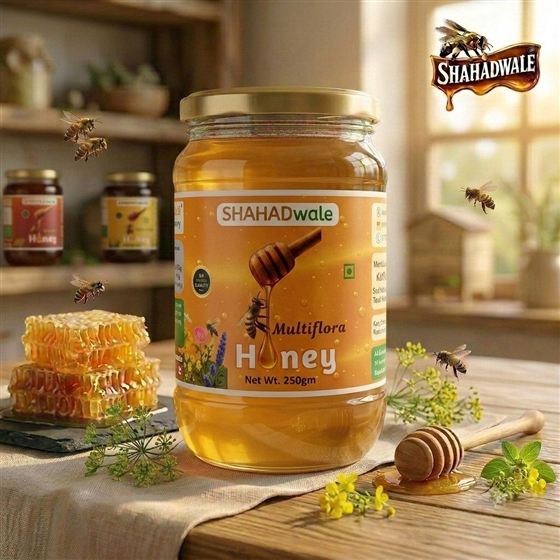
None of these types is inherently “more pure” than another. Purity is about the absence of adulteration; these labels describe processing method or floral origin instead. For a deeper look at regional varieties, see our full breakdown of types of honey in India.
Frequently Asked Questions
1. How can I identify pure honey without lab testing?
Check the ingredient list for “honey” only, confirm a valid FSSAI number, and look for floral source, harvest, and batch details. It won't replace lab testing, but it's the most reliable non-lab approach available.
2. Which honey is pure in India?
Honey from FSSAI-registered brands with transparent sourcing, a single-ingredient label, and traceable batch information is the safest bet — no single visual test can confirm purity on its own.
3. What is the FSSAI standard for honey?
FSSAI sets defined limits for moisture content, sugar composition, and adulterant markers under India's food safety regulations. Licensed manufacturers must meet these, and protocols get updated as adulteration methods evolve.
4. Is the water test reliable for checking honey purity?
No. Both pure and adulterated honey can behave inconsistently in water depending on temperature and technique.
5. Does crystallized honey mean it's pure?
Not on its own, but crystallization is a natural process and shouldn't be mistaken for spoilage. Its complete absence over long periods is more worth noticing.
6. What is NMR testing in honey?
It reads a honey sample's molecular fingerprint and compares it against a reference database of authentic honeys, flagging foreign sugars or syrups that don't match natural composition.
7. Can fake honey be dangerous to health?
It isn't typically acutely toxic, but it offers little of the nutritional value people buy honey for, and misrepresents what you're paying for. Anyone with specific health concerns should speak with a doctor.
8. Is raw honey the same as pure honey?
No. Raw is about processing — not heated or heavily filtered. Pure is about the absence of added sugars. Honey can be pure without being raw.
9. How do I check if an FSSAI number is genuine?
Verify it through FSSAI's official online portal, which lists registered businesses against their licence details.
10. Why does honey sometimes never crystallize?
Some floral sources, like acacia, naturally crystallize slower thanks to higher fructose. But some adulterated honeys also resist crystallization — so weigh this alongside other signs, not alone.
11. Is organic honey automatically pure?
No. Organic certification addresses how bees were raised, not whether the final product was blended with syrup afterward. Both matter independently.
12. What's the difference between pure honey and 100% honey on labels?
Brands often use these interchangeably. The only way to confirm either claim is checking the ingredient list and, ideally, the brand's published lab results.
13. Should I trust honey sold in bulk at local markets over branded jars?
Not automatically. Local sourcing can mean shorter supply chains, but also no regulatory oversight. Ask specific questions about the source.
14. How long does pure honey last once opened?
Properly stored honey has a very long shelf life thanks to low moisture, though quality can shift with prolonged heat exposure, moisture, or contamination from wet spoons.
15. What's the single most reliable at-home indicator of honey purity?
There isn't one perfect indicator. The most reliable combination is the ingredient list, a verified FSSAI number, and a brand that shares batch and sourcing information — not any single physical test.
Final Buying Advice
Honey purity isn't something you settle with a matchstick or a glass of water. It comes down to reading labels properly, understanding what floral source and harvest information actually tell you, and buying from brands willing to be specific instead of vague.
While working with beekeepers across different regions, we've noticed customers ask the same question again and again: why does one batch look lighter than the last one? In most cases, the answer comes down to floral source and season — not quality. SHAHADwale lists floral varieties, harvest regions, and sourcing details directly on its product pages for exactly this reason. That doesn't replace your own due diligence, and it shouldn't. Whatever brand you choose, check the ingredient list, confirm the FSSAI number, and ask questions if the sourcing information isn't clear. That habit alone will filter out more fake honey than any home test ever could.
Explore the SHAHADwale Honey Collection →
References
- Food Safety and Standards Authority of India (FSSAI) — Standards and Regulations for Honey, fssai.gov.in
- Centre for Science and Environment (CSE) — Investigation into Honey Adulteration in India, cseindia.org
- National Bee Board, Ministry of Agriculture & Farmers Welfare — nbb.gov.in
- Agricultural and Processed Food Products Export Development Authority (APEDA) — apeda.gov.in
- Codex Alimentarius Commission — Codex Standard for Honey (CXS 12-1981)
This article is for general consumer education and does not constitute medical or legal advice. For specific health concerns related to diet or honey consumption, consult a qualified healthcare professional.