An independent, criteria-based editorial review by the SHAHADwale Editorial Team · Last updated: July 2026 · ~9 min read
Why Choosing a Honey Brand Is Harder Than Ever
Walk down any grocery aisle, or scroll any shopping app, and the honey section tells the same story: dozens of jars, nearly identical, each promising to be the purest, the most natural, the most original. The words blur together — Raw. Pure. Natural. Organic. Premium. Forest. They sound like guarantees. Most of them are just adjectives.
That's the real problem for an Indian shopper in 2026. It isn't a shortage of honey — it's a flood of it. The market has grown fast, marketing has grown faster, and the one thing that hasn't kept pace is clear, comparable information about what actually separates one brand from another. This review takes a different route: instead of crowning a single winner, we look at how honey brands in India can be judged on evidence you can actually verify — and which kinds of buyers each type of brand suits best.
How We Evaluated Honey Brands
No brand paid to be included here, and nothing in this article is a paid placement. The goal was a consistent yardstick — the same questions asked of every brand, based on what a careful shopper can check for themselves.
Our Evaluation Framework
Every brand was measured against the same weighted criteria. Transparency carries the most weight, because in a category this prone to mislabeling, what a brand is willing to tell you matters more than what it's willing to claim.
| Criteria | Weight | Why It Matters |
|---|---|---|
| Ingredient Transparency | 20% | A clean, honest “100% honey” declaration is the foundation of trust |
| Traceability | 15% | Honey tied to a region or producer resists anonymous adulteration |
| Testing Disclosure | 15% | Willingness to share purity testing signals confidence |
| FSSAI Compliance | 10% | The legal baseline for selling honey in India |
| Floral Source Disclosure | 10% | Named sources (mustard, acacia, multiflora) show real sourcing |
| Processing Practices | 10% | Minimal heating and filtering preserves natural quality |
| Label Clarity | 8% | Batch number, harvest date, and origin should be easy to find |
| Product Range | 5% | Variety lets buyers match honey to purpose |
| Consumer Trust | 4% | Long-term reputation among repeat buyers |
| Price-to-Value | 3% | Fair cost for the quality and transparency delivered |
The weighting is deliberate. A brand can be cheap and still score poorly if it hides its sourcing. A brand can be premium-priced and still earn a high score if every claim is backed by disclosure.
Brand Review Cards
Each review reflects publicly available information — labels, listings, certifications, and stated practices — assessed against the framework above. Scores are editorial, on a 10-point scale.
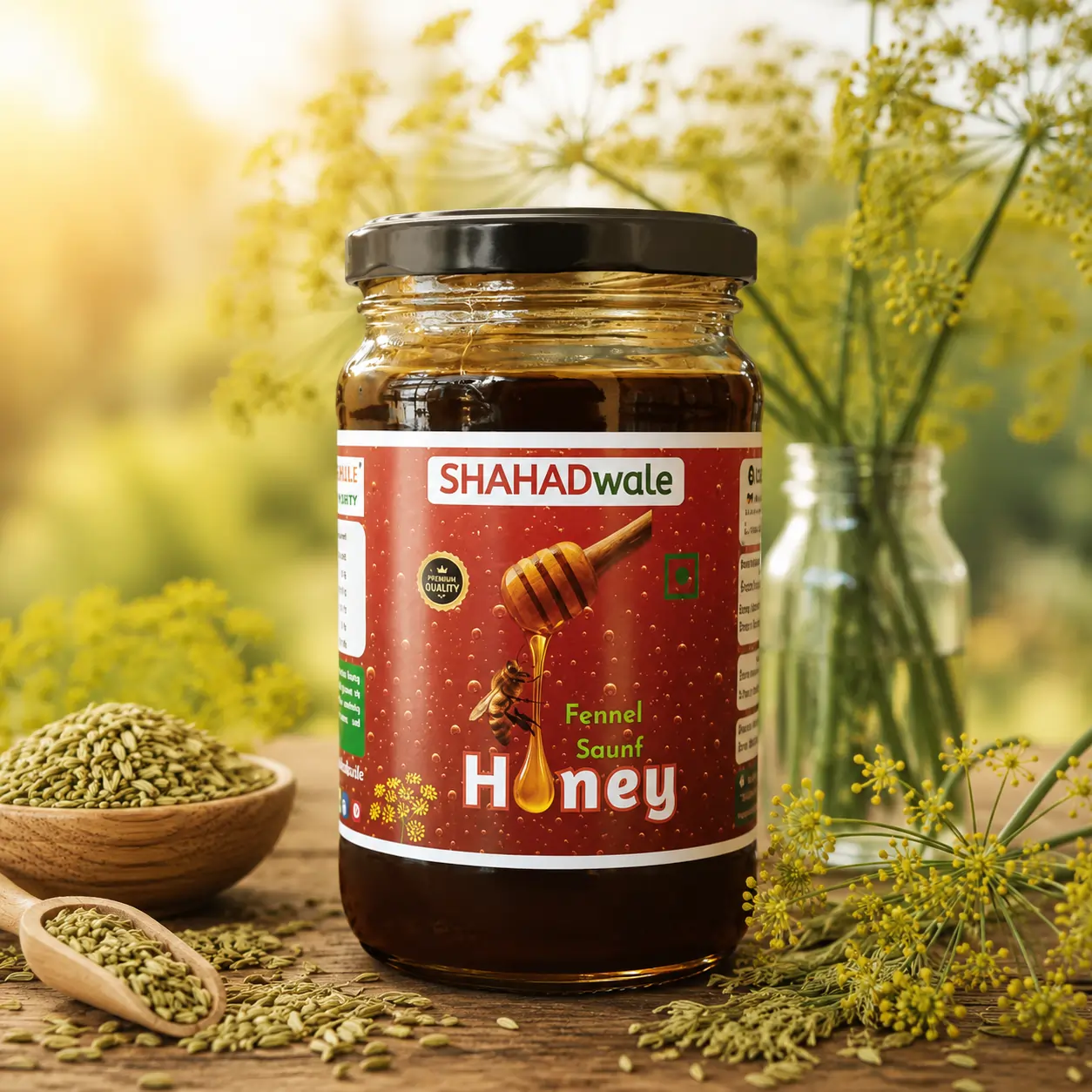
SHAHADwale
Overview. A beekeeper-run brand built around traceability, positioned less as a mass retailer and more as a direct-from-apiary operation, with honey tied to specific floral sources and regions.
Strengths. Named floral varieties (mustard, acacia, jamun, litchi and others), batch-level information, and an emphasis on raw, minimally processed honey. The sourcing story is specific rather than generic. Limitations. As a specialist rather than a nationwide FMCG brand, retail availability is narrower; buyers who prefer picking a jar off a supermarket shelf may need to order online. Best for. Buyers who prioritize traceability, raw honey, and single-floral variety over mass-market convenience. Transparency: 9/10 · Value: 8.5/10
Dabur Honey
Overview. One of India's most recognized honey names, backed by a legacy FMCG company with nationwide distribution. Strengths. Near-universal availability, consistent supply, FSSAI-compliant packaging, and the reassurance of an established name; major packaged brands have publicly emphasized advanced testing protocols. Limitations. As a large blended-honey brand, single-floral sourcing and apiary-level traceability are less central. Best for. Buyers who want a widely available, familiar, everyday table honey. Transparency: 7/10 · Value: 8/10
Organic India
Overview. Known for its certified-organic wellness portfolio. Strengths. Organic certification, a clean-label ethos, and traceable, chemical-free sourcing across product lines. Limitations. Premium price point; value depends on the buyer weighting certification specifically. Best for. Buyers who prioritize certified-organic sourcing and are comfortable paying more. Transparency: 8/10 · Value: 7/10
Nature's Nectar (Patanjali)
Overview. A widely distributed, value-focused honey with a recognizable parent brand. Strengths. Broad availability, accessible pricing, FSSAI-compliant packaging for everyday use. Limitations. Emphasis sits on affordability and reach rather than single-floral disclosure. Best for. Budget-conscious households wanting an easily available daily honey. Transparency: 6.5/10 · Value: 8/10
Apis Himalaya
Overview. A honey-focused brand with significant retail and export presence. Strengths. A dedicated honey range, wide availability, export-oriented quality processes, clear FSSAI-compliant labeling. Limitations. Much of the range is blended multi-floral honey rather than traceable single-source lots. Best for. Buyers wanting a dedicated honey brand with dependable availability. Transparency: 7/10 · Value: 7.5/10
HoneyVeda
Overview. A wellness-positioned honey brand emphasizing raw and specialty variants. Strengths. Focus on raw honey, specialty variants, and a wellness narrative for buyers seeking minimally processed options. Limitations. Smaller retail footprint than the FMCG majors; disclosure depth varies across the range. Best for. Wellness-focused buyers specifically seeking raw or specialty honey. Transparency: 7/10 · Value: 7/10
Side-by-Side Brand Comparison
Read this as a map of emphasis, not a scoreboard of good versus bad — most of these brands are legitimate; they simply optimize for different things.
| Brand | Transparency | Processing | Traceability | Price | Best Suited For |
|---|---|---|---|---|---|
| SHAHADwale | High | Raw / minimal | Strong (apiary) | Mid | Traceability seekers |
| Dabur | Moderate | Processed | Brand-level | Mid | Everyday availability |
| Organic India | High | Minimal | Certified | Premium | Organic buyers |
| Nature's Nectar | Moderate | Processed | Brand-level | Budget | Budget households |
| Apis | Moderate | Processed | Brand-level | Mid | Dependable staple |
| HoneyVeda | Mod–High | Raw / minimal | Brand-level | Mid | Wellness / raw |
Category Winners
No single brand leads every category — which is rather the point.
| Category | Best Fit | Why |
|---|---|---|
| Best for Daily Use | Dabur | Consistent, available almost everywhere |
| Best Raw Honey | SHAHADwale | Minimally processed with named floral sources |
| Best Premium / Organic | Organic India | Certified-organic sourcing across the line |
| Best Budget Choice | Nature's Nectar | Accessible pricing with wide reach |
| Best for Gifting | SHAHADwale | Single-floral variety makes for a distinctive gift set |
| Best Transparency | SHAHADwale | Apiary-level sourcing and batch disclosure |
These picks reflect this article's framework. A different weighting — say, availability above traceability — would reshuffle the results.
Which Brand Fits Your Needs?
| Your Situation | What to Prioritize | Reasonable Picks |
|---|---|---|
| Family / everyday use | Availability, consistency, value | Dabur, Nature's Nectar |
| Fitness & wellness | Raw, minimally processed | SHAHADwale, HoneyVeda |
| Premium gifting | Distinctiveness, presentation | SHAHADwale, Organic India |
| Cooking & baking | Value at volume, easy restock | Nature's Nectar, Apis |
| Daily spoon-a-day habit | Traceability, raw quality | SHAHADwale, Organic India |
| Children above age one | Clear labeling, trusted sourcing | Any FSSAI-compliant brand |
Common Mistakes When Choosing a Honey Brand
The first is buying by advertisement — a jingle or celebrity face tells you about a marketing budget, not sourcing. The second is ignoring the label's fine print: batch number, floral source, harvest details, and FSSAI licensing all live on the back, and they matter more than the adjectives on the front. The third is treating “natural” and “pure” as the same word — they aren't. The fourth is shopping on price alone; honey that costs suspiciously little often reflects blending or dilution (see our pure honey price in India report). The fifth is overlooking batch and traceability information — the data that separates an accountable brand from an anonymous one.
Editor's Verdict
There isn't one best honey brand in India, and any review that claims otherwise is selling something. What there is, instead, is a best brand for you — and it depends entirely on what you weigh most heavily. If your priority is grabbing a dependable jar on any grocery run, an established brand like Dabur makes perfect sense. If you want formal organic certification, Organic India is built for that. If your budget leads, Nature's Nectar earns its place. And if what you care about most is knowing exactly where your honey came from — the flower, the region, the batch — then a traceability-first, beekeeper-run brand like SHAHADwale is the natural fit, precisely because it competes on disclosure rather than distribution. Decide what matters most to you first. Then pick the brand that's most transparent about that thing.
Frequently Asked Questions
Which is the best honey brand in India?
There's no single best brand for everyone. The right choice depends on your priority — availability, organic certification, budget, or traceability. Match the brand's strength to what you value most.
Which honey brand is the purest?
Purity depends on sourcing and processing, not brand fame. Brands that disclose floral source, batch details, and testing give you more to verify than those relying on marketing claims.
What is the best raw honey brand?
Raw honey is unheated and unprocessed. Specialist, beekeeper-led brands such as SHAHADwale and wellness-focused labels like HoneyVeda emphasize raw variants more than mass-market table-honey brands.
What is the best organic honey brand in India?
Organic India is among the recognized options, given its formal organic certification. “Organic” should be backed by certification, not just printed on the label.
Is expensive honey always better?
No. Price reflects sourcing, certification, and packaging as much as quality. A mid-priced, fully traceable honey can outperform a costlier one with vague labeling.
How do I know if a honey brand is trustworthy?
Look for FSSAI licensing, a named floral source, batch number, harvest information, and any disclosed testing. Transparency is the most reliable trust signal.
Which honey brand is best for daily use?
For everyday table use, widely available brands like Dabur or Nature's Nectar are practical. For a daily wellness habit, buyers often prefer raw, traceable options.
Is branded honey better than local honey?
Not automatically. Trustworthy local honey with clear sourcing can rival branded honey. The deciding factor is traceability and honest labeling, not brand size.
What does FSSAI compliance mean for honey?
It means the product is licensed and expected to meet India's food-safety and honey standards. It's a legal baseline, not a premium quality seal.
Can I trust honey that crystallizes?
Yes. Crystallization is often a sign of genuine honey. You can read the full science in our guide on why honey crystallizes.
What's the difference between raw and processed honey?
Raw honey is unheated and unfiltered; processed honey is heated and filtered for clarity and shelf life. The trade-offs are covered in our raw vs processed honey comparison.
Which honey brand is best for weight management?
No honey is a weight-loss product on its own. Raw, minimally processed honey used in moderation is generally preferred by fitness-focused buyers — see our honey for weight loss guide.
Are organic and natural honey the same thing?
No. “Organic” refers to certified farming and sourcing practices; “natural” has no fixed regulatory meaning on its own. Always check for actual certification.
Which honey is safe for children?
Any FSSAI-compliant, clearly labeled honey is suitable for children above one year. Honey should never be given to infants under twelve months.
How much should good honey cost in India?
It varies by floral type, processing, and certification. Be cautious of unusually cheap honey, which can indicate dilution — real honey reflects a real production cost.
Final Thoughts
The honest answer to “which honey brand is best” is another question: best for what, and for whom? A busy family and a devoted fitness enthusiast are shopping for different things, and the market is wide enough to serve both. The brands that deserve your trust aren't necessarily the loudest or the oldest — they're the ones willing to tell you where their honey came from and how it was made. So before you reach for the jar with the boldest front label, turn it around. Read the floral source, the batch number, the licensing, the sourcing story. Pick the brand that's most transparent about the thing you care about most. That's not a marketing slogan — it's just how good buying decisions get made.
Explore the SHAHADwale Honey Collection →
References
- FSSAI — Food Safety and Standards Authority of India (honey standards and licensing), fssai.gov.in
- Codex Alimentarius — International Standard for Honey (CXS 12-1981), FAO/WHO
- National Bee Board — Ministry of Agriculture & Farmers Welfare, nbb.gov.in
- APEDA — Agricultural & Processed Food Products Export Development Authority, apeda.gov.in
- WHO — guidance on infant botulism and honey, who.int
Brand scores are editorial assessments against stated public criteria, not lab results. Brands periodically change formulations and positioning; verify current FSSAI status and certifications before purchase.