An independent buyer's guide by the SHAHADwale Editorial Team · Last updated: July 2026 · ~19 min read
Stand in front of the honey shelf at any Indian supermarket and you'll see the same thing happening to everyone: people picking up jar after jar, squinting at labels, and putting most back down. “Pure,” “100% Natural,” “Organic,” “No Sugar Added” — the words are everywhere. So is the doubt. A widely reported 2020 investigation by the Centre for Science and Environment (CSE) found that a majority of the honey samples it tested from major Indian brands failed advanced adulteration screening (NMR and trace-marker testing), despite passing India's standard lab checks at the time — a finding some named brands publicly disputed.[1] The concern remains relevant for shoppers because honey adulteration has been documented in the Indian market, and regulators and industry have since discussed more rigorous testing standards.
This guide focuses on one question: how should a consumer actually choose honey? It walks through what determines honey quality — floral source, extraction method, lab testing, and traceability — so you can evaluate any jar yourself, at any store, before you buy. For deep dives into related topics (honey types, home purity tests, raw honey's benefits, brand-by-brand comparisons, pricing, or weight loss), this guide links out to SHAHADwale's dedicated articles rather than repeating them here.
Table of Contents
- Why Honey Quality Matters
- Why Trust Matters More Than Marketing Claims
- What Makes the Best Honey?
- Types of Honey Available in India
- How to Identify Pure Honey
- How to Read a Honey Label
- Raw Honey vs Processed Honey
- Organic Honey vs Natural Honey
- Top Factors to Compare Before Buying
- How We Evaluated Honey Brands
- Comparing Leading Honey Brands in India
- How to Choose the Best Honey Brand
- Common Mistakes People Make While Buying Honey
- Where to Buy Authentic Honey Online
- Benefits of Pure Honey
- Which Honey Suits Which Need?
- Common Honey Myths
- Frequently Asked Questions
- Final Buying Advice
Why Honey Quality Matters
India is among the world's largest honey producers and also exports honey internationally. Bees, meanwhile, are commonly cited as vital pollinators for a large share of global food crop production.
Adulteration undercuts the beekeepers who do things the right way. Processing can also alter some of honey's natural enzymes, aroma compounds, and other characteristics, which is part of why genuine honey — whatever its processing style — is worth choosing over flavoured sugar syrup sold under a honey label, whether you're comparing everyday options or looking specifically for organic honey in India.
Why Trust Matters More Than Marketing Claims
“Pure” and “natural” have been used so loosely on packaging that they've stopped meaning much on their own. A brand worth trusting generally shows this rather than only claiming it: sourcing from beekeepers given time to let bees ripen honey naturally, direct relationships with Indian beekeepers rather than unnamed aggregators, batch-level information shared with customers rather than a one-time claim reused indefinitely, and honey that's harvested naturally rather than artificially dehydrated to mask high moisture.
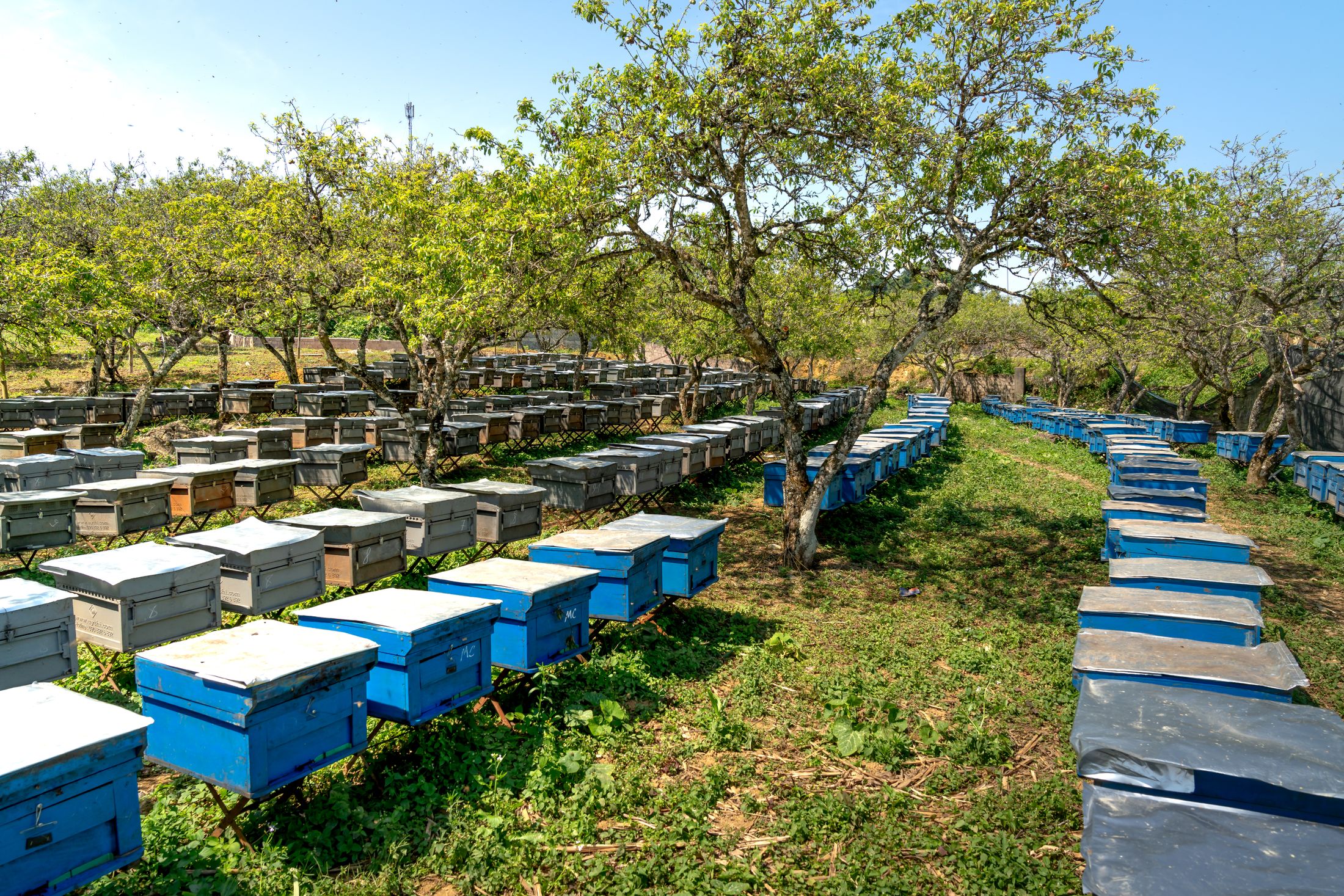
This is the standard SHAHADwale works toward as well. It's mentioned here not as a claim that SHAHADwale is automatically the right fit for every kitchen, but as an example of what “trustworthy” can look like in practice — a standard worth expecting from any brand you're considering, SHAHADwale included. If you want to see the sourcing information behind a specific product, SHAHADwale's contact page is a direct way to ask.
What Makes the Best Honey?
“Best honey” isn't one fixed product — it's a combination of factors that together determine how close a jar is to what a bee actually made.
Purity comes first: no added sugar syrup, no fillers. Adulteration is widely reported as the biggest problem in the Indian honey market, and it's usually invisible to the naked eye.
Processing style matters too — raw honey is lightly strained but not heated or ultra-filtered, while processed honey goes through heat and fine filtration that extends shelf life but reduces pollen and aroma (more on this distinction below). Floral source shapes colour, flavour, and how quickly honey crystallises.
Harvesting method affects moisture: bees generally cap a honeycomb cell only once it reaches a sufficiently low moisture level for stable storage, so honey pulled from well-capped frames tends to start out more stable than an early harvest that's later dehydrated artificially to compensate.[6]
Where a brand discloses batch-level lab data — moisture, HMF, and, in some cases, NMR — that's useful supporting evidence, though no single test is a complete substitute for the others.
Last is traceability: a brand that can name the region, season, and apiaries behind a jar is giving you something concrete to check, which is one practical marker of transparency alongside the others above.
Types of Honey Available in India
India's geography — from Himalayan meadows to the mustard belts of Punjab and Rajasthan to the mangrove forests of the Sundarbans — produces an unusually wide range of honey. This section gives a brief overview; for a full breakdown of each type, see our dedicated Types of Honey in India guide.
- Raw Honey. A processing category, not a floral type — minimally strained, retaining natural enzymes and pollen. See our Raw Honey Benefits guide for more.
- Forest Honey (Wild Honey). Harvested from wild combs in forested regions; typically darker in colour than lighter honeys. SHAHADwale sells this as its Multi Flora / Shivalik Forest Honey range.
- Mustard Honey. Common in North India, from mustard (sarson) fields in winter; strong, pungent, and crystallises quickly — normal, not a defect. See our Natural Mustard Honey range.
- Acacia Honey. Light, mild, high-fructose, and mono-floral, which is why it stays liquid far longer than most others. See our Acacia Honey range.
- Eucalyptus Honey. Sourced from eucalyptus blossoms, with a distinct herbal aroma. See our Eucalyptus Honey range.
- Ajwain Honey. Sourced partly from ajwain (carom) flowers, sharp and pungent, and commonly used in North Indian households. See our Ajwain Honey range.
- Multiflora Honey. Widely available, made from nectar collected from multiple flowering plants across a season. Batch-to-batch variation can occur because floral sources and seasons change.
Honey Types Comparison
| Honey Type | Floral Source | Flavour Profile | Typical Crystallisation Tendency | Often Chosen For |
|---|---|---|---|---|
| Raw Honey | Mixed/seasonal | Complex, floral, earthy | Tends to crystallise at a moderate-to-faster pace | Everyday use |
| Forest Honey | Wild forest flora | Bold, dark, robust | Tends to crystallise more slowly | Bold flavour preference |
| Mustard Honey | Mustard (sarson) | Strong, slightly pungent | Tends to crystallise quickly | Winter use, North Indian cuisine |
| Acacia Honey | Acacia blossoms | Light, mild, delicate | Tends to stay liquid much longer than most | Everyday sweetener, tea/coffee |
| Eucalyptus Honey | Eucalyptus flowers | Herbal aroma | Tends to crystallise at a moderate pace | Seasonal preference |
| Ajwain Honey | Ajwain/carom flowers | Sharp, pungent | Tends to crystallise at a moderate pace | Traditional use |
| Multiflora Honey | Multiple wildflowers | Varies by season | Varies by batch and season | General everyday consumption |
Crystallisation speed depends on a honey's specific glucose-to-fructose ratio, which varies batch to batch even within the same floral type — treat the tendencies above as general patterns, not fixed rules.
How to Identify Pure Honey
Much of what circulates online about spotting pure honey at home doesn't hold up well. The water test is inconsistent, since viscosity depends on moisture and floral source. The matchstick or flame test is unreliable as a standalone method and mildly risky besides. The crystallisation test is also frequently misread — crystallisation is driven by the glucose-to-fructose ratio and is actually more common in raw, minimally processed honey; warming the jar in warm water reliquefies it. None of these home methods can establish purity on their own. See our detailed Honey Crystallization guide for more.
So what's actually useful if you want to avoid a diluted blend? Check the label for a named floral source and region. Look for any lab test disclosures the brand shares, such as batch-level moisture, HMF, or NMR data. Compare price to market reality — a price far below the going rate for that honey type is worth questioning. And check for the FSSAI logo and licence/registration number on the label, which you can verify on the FSSAI portal — this confirms regulatory compliance, not adulteration-free status. Laboratory methods such as NMR fingerprinting and pollen analysis provide stronger evidence than home tests, though even these assess different specific parameters rather than delivering a single universal “purity score.” For a deeper walkthrough, see our full How to Identify Pure Honey guide.
How to Read a Honey Label (Before You Add It to Cart)
Most people spend far longer comparing prices between two jars than reading the ingredients list on either one — that's usually where the more useful information is.
Words like “pure” and “natural” on the front of a jar shouldn't be treated as proof of purity on their own — they're marketing language unless backed by something checkable, like a certification mark or licence number. For “organic” specifically, look for the applicable certification mark and licence details rather than taking the word alone at face value. The ingredients list for genuine honey should read simply “honey” — if you spot “invert sugar syrup,” “corn syrup,” or “glucose syrup,” you're looking at a blended product. Look for the FSSAI logo and the applicable licence/registration number on the label — this is a regulatory requirement for food businesses in India, and you can check the number on the FSSAI licensing portal; it confirms the seller is registered, not that the specific jar is unadulterated. Floral source and harvest details matter too: a named flower plus a season or region tells you more than “multi-flower honey” on its own. Certification marks like NPOP, USDA Organic, or AGMARK add a layer of accountability, though they relate to farming practice or grading standards and don't by themselves test for sugar-syrup adulteration.
Raw Honey vs Processed Honey
| Parameter | Raw Honey | Processed Honey |
|---|---|---|
| Heating | Typically not heated, or only minimally warmed | Commonly heated as part of processing (temperatures vary by producer) |
| Filtration | Lightly strained (removes wax/debris only) | More finely filtered, which can reduce pollen content |
| Enzymes & Pollen | Generally retained | Can be reduced, depending on the filtration method used |
| Appearance | May look cloudy; crystallises naturally over time | Often clearer and slower to crystallise |
| Shelf Stability | Good, though texture may change as it crystallises | Tends to stay visually consistent for longer |
| Flavour Complexity | Often reflects floral source distinctly | Can be milder or more uniform |
Neither option is inherently unsafe. Processed honey that hasn't been adulterated is still genuine honey — the dividing line is added sugar syrup, not processing itself. For a closer side-by-side, see our Raw Honey vs Processed Honey guide.
Organic Honey vs Natural Honey
These two terms are often used interchangeably in marketing, but they generally mean different things. Organic honey refers to honey certified under a recognised organic scheme — such as NPOP (India's national programme) or USDA Organic — which sets standards for foraging areas and beekeeping practices that meet the applicable organic standard, and typically involves some form of third-party audit of the supply chain. Natural honey is a broader, less regulated term that generally implies no synthetic additives, but it isn't a certification, so it doesn't by itself guarantee pesticide-free foraging or an audited supply chain the way an organic certification does.
Organic honey should generally qualify as natural, but not all natural honey is certified organic. If certification matters to you, look for the actual mark and licence number rather than relying on the word “organic” alone.
Top Factors to Compare Before Buying the Best Honey in India
Before buying, it helps to run any jar through a short checklist rather than comparing on price alone: price (a “premium” jar priced like a supermarket staple is worth questioning), floral source (named, not a vague catch-all), packaging (food-safe, well-sealed, and suited to long-term storage), lab testing (disclosed batch results where a brand shares them, rather than a bare claim), independent reviews, stated origin and region, and traceability back to an apiary network and season.
How We Evaluated Honey Brands
“Best honey” is a meaningless label unless someone states what it's being measured against. The comparison below uses these lenses: purity (no added sugar syrup, based on what's publicly disclosed), transparency (named floral source, region, season), testing disclosure (whether batch-level lab data is shared, not just claimed), floral source variety (monofloral options versus generic blends), traceability (a jar's link back to an apiary network), and customer trust (independent reviews where available). No brand receives a numeric score against these criteria — they are simply the lens used below, and this article does not attempt to rank brands against each other in detail (see our dedicated Best Honey Brand in India guide for that comparison).
Comparing Leading Honey Brands in India
A guide like this naturally invites a look at specific brands, so here is a brief, neutral snapshot of a few widely available names — SHAHADwale included — based only on what each brand publicly states about itself. No brand is ranked here, and this is not a substitute for our full brand-by-brand comparison. Where something isn't publicly disclosed, that's noted rather than assumed.
| Brand | Raw Honey Line | Monofloral Options | Public Lab-Testing Claim | Floral Source Transparency |
|---|---|---|---|---|
| SHAHADwale | Yes — core focus | Yes (mustard, ajwain, forest, etc.) | Not prominently disclosed on-site | Named source and region (e.g., Shivalik Forest, Himalayan foothills) |
| Dabur | Describes some products as processed/filtered, per its own published FAQ | Not marketed as monofloral | States on its own purity-FAQ page that it tests against FSSAI's 22 mandated purity parameters and uses NMR spectrometry to build an internal honey-characteristics database[2] | Sourcing regions named on-site; specific floral naming not prominent |
| Organic India | Markets its Multi Floral Honey as raw and unprocessed, per its own product page | Not publicly marketed as monofloral | Not prominently disclosed on the product page reviewed | Region explicitly named (Shivalik range of the Himalayas)[3]; page states “Organic Certified” without naming a specific certifying body in the visible text |
| Nature's Nectar | Markets several lines as raw and unprocessed, per its own site | Some named single-origin lines (e.g., Kashmir Acacia, Raw Jamun) | Publicly and prominently states its honey is NMR-tested (states testing done in Germany) and free from added sugars[4] | Named regional/floral lines (e.g., Raw Forest, Kashmir Acacia); part of an exporter group the brand describes as True Source certified |
| Apis (Himalaya Honey) | Markets as raw and natural, per its own site | Not prominently marketed as monofloral | Site references a “Check Report” / certificate link; specific test type not detailed in the content reviewed | Branded “Himalaya Honey,” but the specific sourcing sub-region isn't spelled out on the page reviewed |
Honey purity in India has been a publicly discussed topic — a widely cited 2020 CSE investigation reported most tested honey samples, including from several major brands, failing advanced adulteration screening, a finding some named brands disputed at the time.[1] That dispute isn't the focus of this guide, and none of the brands in the table above are alleged here to be adulterated — the table reflects only what each currently states about itself. A more practical habit for any shopper: ask a brand directly for its current batch-level test data and FSSAI registration details.
How to Choose the Best Honey Brand in India
With purity concerns this widespread, brand selection matters as much as flavour preference. Beyond the factors already covered above, it's worth checking whether a brand discloses voluntary batch testing (shared rather than only claimed), states a harvest region and season, and describes beekeeping practices that give bees time to ripen honey rather than harvesting early. Independent reviews, food-safe and well-sealed packaging, and natural crystallisation over time are also useful secondary signals.
Buying Checklist
| What to Check | Why It Matters |
|---|---|
| FSSAI logo and licence/registration number on label | Confirms the seller is registered — a regulatory baseline, not proof of purity |
| Named floral source (e.g., mustard, acacia, forest) | Signals transparency over vague “pure honey” claims |
| Batch-level lab test disclosure, where available (HMF, NMR, moisture) | Adds supporting evidence alongside other checks |
| Harvest region/season mentioned | Indicates traceability |
| Organic certification (if relevant to you) | Relates to pesticide-free farming practices |
| Food-safe, well-sealed packaging | Supports long-term storage stability |
| Reasonable pricing relative to honey type | Prices far below the norm are worth questioning |
| Natural crystallisation over time | Can occur naturally; not a standalone purity test |
Common Mistakes People Make While Buying Honey
Even careful shoppers fall into a few traps: trusting the front label over the ingredients list, assuming crystallised honey has gone bad, choosing on price alone, skipping the FSSAI number, or relying on a single viral home test. Storage after purchase is often overlooked too — even genuine honey can ferment if exposed to moisture from a wet spoon or a poorly sealed lid.
Where to Buy Authentic Honey Online in India
Buying online removes the one thing you'd normally do in a store — pick up the jar and look at it. A few extra checks help compensate: buy from the brand's own website or verified marketplace listings, look for batch numbers and expiry dates in product photos, read the return policy before ordering, and cross-check the FSSAI number on the physical label once it arrives against what was listed online. A clear sourcing story on the product page (region, floral source, harvest area), rather than a bare “100% pure” claim, is a reasonable baseline to expect from any brand.
Benefits of Pure Honey
Honey has long been part of Indian households and Ayurvedic tradition, and it plays a general wellness role in many diets — though it is not a treatment or cure for any medical condition. Raw honey retains natural enzymes such as invertase and diastase, though the amount varies by honey source and is reduced by heating.[5] Honey is still a sugar and affects blood sugar levels; its glycaemic impact varies by floral source and isn't uniformly lower than table sugar's, so it should be treated as a sugar source rather than a “safer sugar,” even though some people prefer it as an ingredient in workout-focused diets for its taste and composition.
Darker honeys, such as forest honey, are associated in food-science research with higher levels of naturally occurring phenolic and flavonoid compounds and correspondingly higher antioxidant activity than lighter honeys, though the exact levels vary by batch, floral source, and region.[7] In Ayurveda, honey (madhu) is traditionally considered a yogavahi — an ingredient believed to help carry the properties of other substances it's paired with, such as ginger, lemon, or turmeric; this is a traditional classification rather than a clinical claim. Used in place of refined sugar, honey can fit into a broader effort to reduce processed sugar intake, though it remains calorie-dense and should be used in moderation. See our Best Honey for Weight Loss guide for a more detailed look at that specific topic.
Which Honey Suits Which Need?
| Preference / Occasion | Honey Type | Shop This at SHAHADwale |
|---|---|---|
| Daily Use | Multiflora | Multiflora Honey |
| Winter / North Indian Cooking | Mustard | Mustard Honey |
| Tea & Coffee (children above 12 months and adults) | Acacia | Acacia Honey |
| Bold, Robust Flavour | Forest | Forest Honey |
| Seasonal Preference / Herbal Aroma | Eucalyptus | Eucalyptus Honey |
| Traditional Use | Ajwain | Ajwain Honey |
Note: SHAHADwale lists Multiflora and Forest Honey together as one product line — sold as “Multi Flora Honey | Shivalik Forest Honey.”
Common Honey Myths
- “Honey never crystallises if it's pure.” Not accurate — crystallisation is common in raw, minimally processed honey and isn't a purity indicator either way.
- “Dark honey is always better than light honey.” Not necessarily — colour reflects floral source, not purity or quality.
- “If it doesn't dissolve in water, it's 100% pure.” Not a reliable test, since viscosity and moisture vary across genuine honey types.
- “Honey never expires.” It has a long shelf life, but quality can decline over time, and contamination is possible if the jar isn't sealed properly.
- “All 'organic' honey is automatically lab-tested for adulteration.” Organic certification relates to farming practices, not sugar-syrup adulteration testing such as NMR.
Frequently Asked Questions
Which honey is best in India?
There's no single “best honey in India” for everyone — it depends on taste and purpose. Multiflora or acacia works well for daily use, forest honey for a bolder flavour, and ajwain honey for traditional use. More important than “type” is choosing a brand with transparent sourcing and, where available, disclosed testing.
How can I tell if honey is pure or adulterated?
Home tests like the water or flame test aren't reliable on their own. Stronger signals include a valid FSSAI registration, any lab results a brand discloses, a stated floral source, and pricing that's realistic for that honey type.
Is raw honey better than processed honey?
Raw honey retains more natural enzymes, pollen, and aroma. Both can be genuinely pure as long as no sugar syrup is added — processing style and purity are separate questions.
Why does my honey crystallise? Is that a bad sign?
It's caused by the glucose-to-fructose ratio and is common in raw, minimally processed varieties. It isn't a quality issue — warm the jar in warm water to reliquefy it.
What is NMR testing and why does it matter?
NMR (nuclear magnetic resonance) testing builds a chemical “fingerprint” of a honey sample that can flag adulterants standard sugar-ratio tests sometimes miss. Brands that voluntarily share batch-level NMR results are offering more transparency than those that only make a general purity claim.
What's the difference between organic and natural honey?
Organic honey is certified under a recognised scheme (such as NPOP or USDA Organic) that sets standards for foraging areas and beekeeping practices, typically backed by third-party audit. Natural honey generally implies no added sugar but isn't a certification and doesn't require the same audit.
Is honey good for weight loss?
Honey is sometimes used as a substitute for refined sugar in a reduced-sugar diet, but its glycaemic impact varies by type and isn't uniformly lower than sugar's — it's still calorie-dense and isn't a weight-loss remedy on its own.
Can I give honey to babies or young children?
No — honey should never be given to infants under 12 months old, due to the risk of infant botulism. For older children and adults, pure honey in moderate amounts is generally considered safe.
How should I store honey to keep it fresh?
In a tightly sealed, food-safe container at room temperature, away from sunlight and moisture. Avoid a wet spoon, which can encourage fermentation.
What should I check before buying honey online?
The FSSAI licence/registration number, floral source and harvest region, any organic or lab-testing disclosures, and an ingredients list confirming no added sugar.
Does pure honey expire?
It has a long shelf life due to low moisture and natural acidity, but quality can gradually decline, and contamination is possible if the jar isn't sealed properly.
Can diabetics eat honey?
Honey still raises blood sugar, though its effect can differ somewhat from refined sugar depending on its fructose-to-glucose ratio — it is not a “safe” substitute by default. People with diabetes should treat it like any other sugar source and consult a doctor about how it fits their diet.
Final Buying Advice
Skip the folklore tests and the marketing adjectives — transparency is what actually matters. A brand that names its floral source, discloses region and season, shares testing information where available, and carries a valid FSSAI registration is giving you something concrete to evaluate rather than asking you to take its word for it.
If you're looking for honey that follows the principles discussed in this guide, explore SHAHADwale's range of raw, single-origin, and naturally harvested honey — sourced from Indian beekeepers, with floral source and region named on each product. Whatever brand you land on, the checklist in this guide applies the same way: named source, disclosed testing where possible, valid registration, and realistic pricing.
Explore the SHAHADwale Honey Collection →
References & Sources
- Centre for Science and Environment honey adulteration study, reported in Down To Earth, “Honey Fraud: A wrap of CSE study on adulteration” (December 2020). CSE reported 22 samples from 13 Indian brands, with most failing NMR adulteration screening despite passing standard Indian lab protocols; several named brands publicly disputed the findings. downtoearth.org.in ↩
- Dabur Honey Purity FAQ, daburhoney.com. daburhoney.com/purity-faq ↩
- Organic India, Multi Floral Honey product page. organicindia.com ↩
- Nature's Nectar, Pure Honey Collection. natures-nectar.com ↩
- Peer-reviewed food-science literature on diastase and invertase activity in honey — “Diastase and invertase activities in Andalusian honeys,” International Journal of Food Science and Technology; and “Investigation of Variations of Invertase and Glucose Oxidase Degrees against Heating and Timing Options in Raw Honeys,” Journal of Chemistry (2020). ↩
- General beekeeping reference on comb capping and honey moisture content at harvest. ↩
- “Color, flavonoids, phenolics and antioxidants of Omani honey,” peer-reviewed, PubMed Central. Reports darker honeys generally showing higher phenolic/flavonoid content and antioxidant activity than lighter honeys; figures are not India-specific. pmc.ncbi.nlm.nih.gov ↩
- FSSAI — Food Safety and Standards Authority of India (honey standards and licence verification), fssai.gov.in
- APEDA — Agricultural and Processed Food Products Export Development Authority (honey export standards), apeda.gov.in
- Jaivik Bharat / NPOP portal — organic certification (NPOP, PGS-India) verification, jointly run by FSSAI and APEDA
- ICAR — Indian Council of Agricultural Research, and peer-reviewed food-science literature on honey composition and floral-source analysis
This guide is general consumer information, not medical advice or a laboratory certification of any brand. Brand details reflect publicly stated information at the time of writing and can change — verify current FSSAI status and certifications before purchase.