Written by the SHAHADwale Editorial Team · Reviewed by Yash Vardhan Yadav — second-generation beekeeper, SHAHADwale · Last updated: 23 August 2026
Walk into any supermarket aisle or open any honey listing online, and you'll see the same wall of words: organic, pure, natural, raw, unprocessed, premium. They're printed in similar fonts, in similar shades of green and gold, on jars that all promise more or less the same thing — honey the way nature intended it.
The problem is, these words don't actually mean the same thing, and most brands aren't in a hurry to explain the difference. “Organic” is a regulated production claim. “Pure” is about what's really in the jar. “Natural” is closer to a vibe than a standard. “Raw” just tells you how the honey was handled after it left the hive. A jar can honestly claim one of these and say nothing meaningful about the other three — which is exactly how a lot of shoppers end up choosing based on packaging design or price instead of anything that reflects real quality.
This isn't a “which brand is best” article. It won't hand you a name and ask you to trust it. Instead, it walks through what actually makes an organic honey worth buying — certification, sourcing, floral information, processing disclosure, batch traceability, fair pricing — so you can evaluate any jar, from any brand, on your own terms. The best organic honey isn't the one with the loudest label. It's the one whose claims hold up when you actually check them.
What Does “Organic Honey” Actually Mean?
“Organic” describes how something was produced, not just what it contains. For crops, that means no synthetic pesticides or chemical fertilisers. Honey complicates things, though, because bees don't respect farm boundaries — they forage several kilometres in any direction, visiting whatever's in bloom, cultivated or wild.
That's why credible organic certification looks well beyond the hive itself: the land the bees forage on, how the colonies are fed and treated for disease, how far the apiary sits from conventional agriculture or industrial pollution, and how the honey gets extracted, handled and stored afterward. Claiming organic status means demonstrating control over that whole environment, not just having good intentions.
Which is also why a certification mark carries more weight than a claim printed straight on the label. Certification means an accredited third party has actually reviewed the apiary sites, practices, and paperwork against a defined standard — in India, that's the National Programme for Organic Production (NPOP), administered by APEDA, or PGS-India for smaller domestic producers. A brand that simply writes “organic,” with no certifying body named, is making a claim nobody has checked.
It's worth being precise about one more thing: food-safety compliance isn't organic certification. An FSSAI licence — legally required for every food business in India — confirms basic food safety and hygiene standards, not organic production. Honey that's actually organic should be traceable to an NPOP or PGS-India certificate, and increasingly carries FSSAI's Jaivik Bharat logo, the unified mark introduced under the Food Safety and Standards (Organic Foods) Regulations, 2017.
How India's Organic Certification System Actually Works
NPOP (National Programme for Organic Production) is India's main organic standard, run by APEDA. A producer works with an APEDA-accredited certification body, which inspects the apiary, checks the records, and usually requires a multi-year conversion period before certification comes through. The European Commission and Switzerland recognise NPOP's standards as equivalent to their own, which is why it's the route used for organic exports.
PGS-India (Participatory Guarantee System) works differently — it's built for small and marginal farmers, where a local group of producers verifies each other's practices through peer inspection, overseen by the National Centre for Organic & Natural Farming (NCONF). It's cheaper and easier to access than NPOP, but it's valid only for the domestic market.
Jaivik Bharat, meanwhile, isn't a separate certification at all — it's the single green logo FSSAI created so both NPOP- and PGS-India-certified products carry one recognisable mark instead of two. Making it mandatory is still pending official notification in the Gazette of India, so you shouldn't automatically write off a listing for not having it — but where it does appear, it means the product is backed by one of the two certifications above.
In practice: if a listing says “organic” but doesn't name NPOP or PGS-India, or show a certificate number, treat that as a marketing adjective rather than a verified claim. That's not necessarily dishonest — plenty of small, careful beekeepers simply haven't gone through formal certification, which costs money and takes time — but it does mean nobody outside the brand has checked.
Organic, Pure, Natural and Raw Honey Are Not the Same Thing
This is where most of the confusion actually starts, so it's worth slowing down here.
| Term | What It Generally Describes | What a Buyer Should Check |
|---|---|---|
| Organic | Certified production and sourcing practices | Certification body and certificate/licence number |
| Pure | Composition — no sugar syrup, additives, or dilution | Ingredient declaration and lab-test disclosure |
| Natural | A broad, largely unregulated description | Specific sourcing and processing details |
| Raw | How the honey was handled after harvest | Whether it was heated, pasteurised, or filtered |
Organic tells you about the environment the bees foraged in and how the hives were managed — nothing about whether the honey was later heated, blended or filtered. Pure, on the other hand, is purely a composition claim: nothing added, no syrup, no cheaper honey mixed in to bulk up the jar, and it has nothing to do with whether the bees foraged organically. Natural doesn't really mean much in regulatory terms — it gets used mostly because it sounds reassuring, so treat it as a nudge to look for something more specific elsewhere on the label. And raw is about processing: whether the honey was heated past a certain point or micro-filtered, both of which can strip out enzymes, aroma, and the pollen traces that hint at where it actually came from.
None of these four terms is automatically “better” than the others — they simply answer different questions. A honey can be organic without being raw. A honey can be raw without being organic. The mistake buyers make is assuming one label implies the other three.
What Should You Look for in the Best Organic Honey?
1. Certification. Look for the certifying body's name — NPOP-accredited, or PGS-India for domestic sale — and, ideally, a certificate or licence number you could actually look up.
2. Source transparency. Can you tell where the honey was sourced — a specific state, forest range, or agricultural belt? “Sourced from the finest flowers of India” tells you nothing at all.
3. Floral source. Does the label actually say whether this is mustard, acacia, jamun, litchi, multiflora, or something else — or does it just say “honey”?
4. Processing information. Is there any real indication of how the honey was extracted, and whether it was heated or filtered?
5. Ingredient transparency. A genuine honey product should list honey as the sole ingredient. Anything else — added sugar, flavouring, thickeners — should be clearly declared, not buried in fine print.
6. Batch information. A batch or lot number lets a brand trace a specific jar back to a specific harvest. Its absence doesn't mean the honey is fake, but its presence is a good sign.
7. Testing and quality disclosure. A brand's own claim about lab testing isn't the same as independent, third-party certification — treat it as a positive signal, not proof.
8. Price-to-value. Does the price make sense given certification, sourcing, packaging, and scale? An unusually high price with no documentation is just as much a red flag as an unusually low one.
How Organic Honey Is Sourced
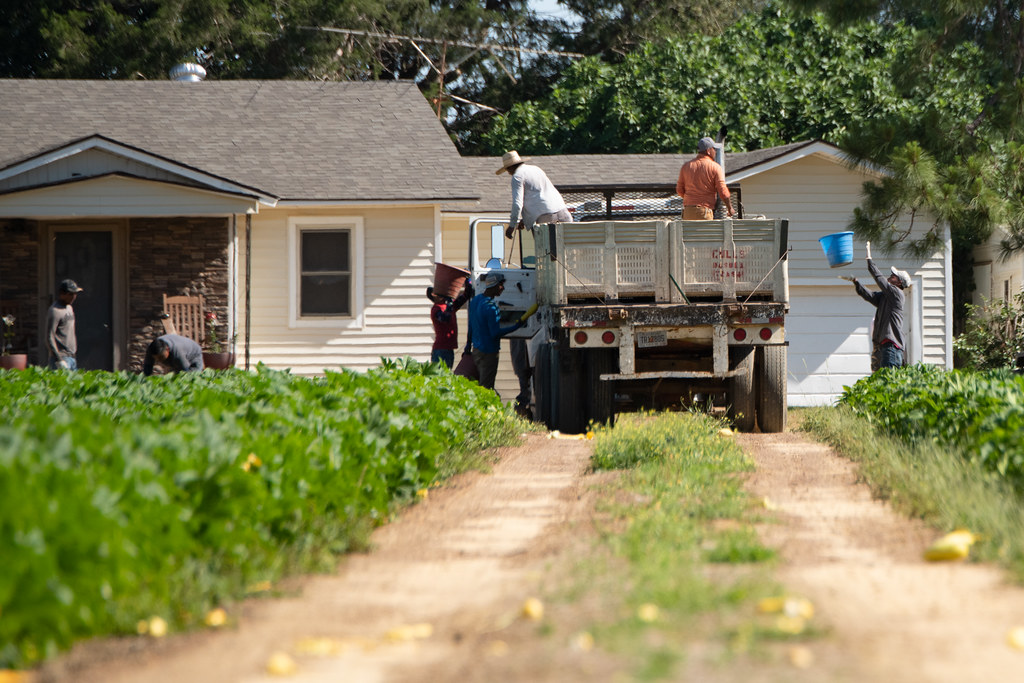
Bees simply collect nectar from whatever's flowering nearby at the time. In India, that might mean mustard fields in the plains during winter, litchi orchards in parts of Bihar and West Bengal come spring, acacia and jamun trees across central India in summer, or wild forest flora in the Himalayan foothills and the Shivalik range through the warmer months. The floral source shapes the honey's colour, aroma, viscosity, and taste directly — mustard honey tends to be light and quick to crystallise, while forest and multiflora honeys are usually darker and more complex.
For a honey to be credibly organic, this whole forage environment matters, not just the hive box. A colony parked near intensively sprayed farmland complicates an organic claim regardless of how well the beekeeper manages the hive itself, which is why organic beekeeping tends to rely on apiaries near forests, hill ranges, or organically farmed land — places with less exposure to synthetic agrochemicals.
Single-Floral vs Multiflora Organic Honey
Once you understand sourcing, the single-floral versus multiflora distinction is easy to use as a buying filter.
| Type | Typical Characteristics | Best For |
|---|---|---|
| Single-floral | Nectar dominated by one flower source (e.g., mustard, acacia, jamun, litchi) | Buyers who want a distinctive, consistent flavour profile |
| Multiflora | Nectar gathered from multiple flowering sources in one region and season | Everyday use and a broader, more complex flavour |
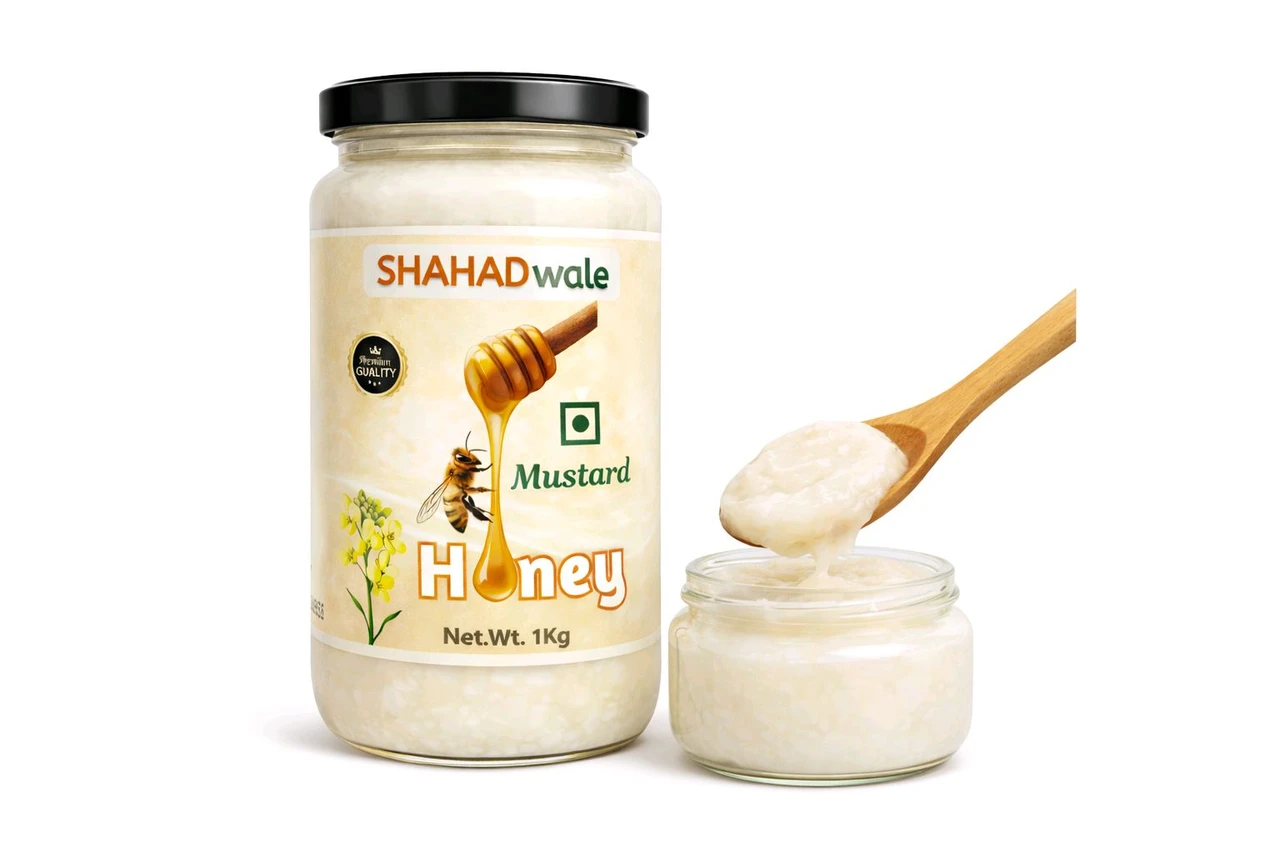
Single-floral honey takes its name from whichever flower's nectar dominates a harvest — it's almost never 100% from one plant, but a concentrated enough source defines the colour, aroma, and taste closely enough to earn the name. Mustard honey is common across northern India, light and mild. Acacia is prized for its pale colour and slow crystallisation. Jamun and litchi carry their fruit blossoms' distinctive aroma and tend to be seasonal and regional.
Multiflora honey comes from bees foraging across several plants in one area, often diverse forest zones. It's typically more affordable, fuller-flavoured, and a practical everyday choice.
Neither type is inherently healthier purely because of its floral source — be wary of any claim that frames a variety as a cure for a condition. The real choice is about taste, seasonal availability, and price, not a health hierarchy. (See Types of Honey in India for more on how the regional varieties differ.)
If you already know you prefer a distinctive single-floral taste, acacia and mustard are the two most widely stocked single-floral varieties in India.
How to Read an Organic Honey Label
Check 1 — Product name. Does it say “organic honey,” “raw organic honey,” or just “natural honey” with “organic” used loosely elsewhere on the pack? The exact wording matters.
Check 2 — Ingredients. The list should read “honey” and nothing else, unless it's explicitly a flavoured or blended product — in which case every addition should be declared.
Check 3 — Certification. Look for the certifying body's name and, ideally, a certificate number, usually near the FSSAI licence number.
Check 4 — Origin. Can you tell where it actually came from — a state, a region, a named forest range? Even a general area beats nothing.
Check 5 — Batch number. This ties a specific jar back to a specific harvest, which matters if there's ever a quality question to trace.
Check 6 — Manufacturer or marketer. A named company, address, and contact detail is a basic accountability signal — a vague “marketed by” line with no traceable entity is not.
Check 7 — FSSAI information. Confirms food safety compliance only — it's not evidence of organic certification, and the two shouldn't be conflated.
Check 8 — Pack size and pricing. Compare per-100g or per-kg, not by jar price alone.
For hands-on checks you can run at home, see How to Identify Pure Honey (2026): Spot Real vs Fake Honey.
Does Organic Honey Need to Be Raw?
No. Organic is about how and where the honey was produced — the certification, the forage environment, the beekeeping practices. Raw is about what happened to it after it left the hive — specifically, whether it was heated or finely filtered before bottling.
A honey can be certified organic and still get a mild heating for smoother texture and easier bottling. Equally, a honey can be marketed hard as “raw” and “unprocessed” without carrying any organic certification at all — raw simply describes handling, not sourcing.
Evaluate these as two separate claims: organic certification for sourcing, clear processing information for handling. Don't assume one guarantees the other. (See Raw Honey vs Processed Honey – Which One Is Better for Health? for what heating and filtration actually change.)
How Much Does Organic Honey Cost in India?
Exact market averages shift too often — by region, brand, season — for a single figure here to mean much. What actually drives the price is a mix of things: certification (the audits and paperwork add up), floral variety (a seasonal, regionally limited honey like litchi or jamun costs more than multiflora), sourcing and production scale (smaller, controlled harvests cost more per kg than big commercial runs), processing and packaging (minimal heating, glass jars, tamper-evident seals all add cost), and whether the brand invests in traceability — batch tracking and the like.
As a rough tier rather than a fixed price: everyday multiflora honey sits at the more affordable end; single-floral varieties like mustard and acacia cost somewhat more; and seasonal or rarer single-floral honeys (jamun, litchi), or anything carrying full third-party organic certification, sit at the premium end.
Work out the price per 100g or per kg rather than comparing jar prices directly — a smaller jar priced lower can easily cost more per unit weight than a larger one that looks pricier at first glance. For current figures, see Shahadwale's Pure Honey Price in India (2026).
Organic Honey Buying Online — What to Check Before You Order
Before you order, check that the product description actually matches what a physical label would show, and that certification is stated explicitly rather than implied through phrases like “certified pure” with no certifying body named anywhere. Look at the ingredients list, work out the price per 100g, and check whether the product images include a real label shot rather than just a styled jar on a white background. It's also worth checking who you're actually buying from — the seller's identity, whether there's a batch number, what genuine reviews (not just the star rating) say, and what the shipping and return policy looks like if the jar doesn't match the listing.
The most common online buying mistake is trusting a listing title — “100% Pure Organic Honey” — without scrolling down to see if any of it is actually substantiated. For a side-by-side starting point across brands, see Best Honey Brand in India (2026).
Where Shahadwale Fits Into the Organic Honey Conversation
Here's how Shahadwale, an Indian honey producer, maps onto the checklist above — not as a claim that it's automatically “the best,” but as an example of applying the framework to a real brand.
Shahadwale is a beekeeping business founded in 2002 by Ram Kishor Yadav, now run alongside his son Yash Vardhan Yadav as a second-generation operation. It describes itself as “a group of beekeepers” rather than a single centralised apiary, with hives migrated seasonally toward the Shivalik range and the mustard-growing belts of Rajasthan, away from intensively farmed, chemically treated land — that's genuine source transparency, naming actual regions instead of a vague “sourced from India.”
On floral variety, the range is wider than most Indian brands offer: beyond the usual mustard, acacia, jamun, litchi and multiflora, there's also ajwain, tulsi, fennel, eucalyptus, berry, sesame and herb-flora honey. And on processing, the brand says its honey isn't heated or micro-filtered — which is a processing claim, worth keeping separate from any organic-certification claim.
So, applying the certification framework directly: Shahadwale's own materials use “organic” descriptively, but the brand's website doesn't name an NPOP-accredited certification body, a PGS-India registration, or a certificate number, and it doesn't display the Jaivik Bharat logo. That doesn't mean the honey isn't good — it means the “organic” claim currently reads as marketing language, not a certified one. If certification matters to you, ask the brand directly for certificate details before treating “organic” as verified. What Shahadwale documents more concretely is brand history: founded in 2002, covered by outlets including Dainik Bhaskar, Patrika, and Yuva Bharat, and recipient of an Indigenous Food Heritage Award at the Sustainable Agriculture Summit & Awards 2026 — real signals of an established business, though not the same thing as third-party organic certification.
The practical step is the same one this guide has recommended for any brand: check the specific certification, batch, and sourcing details on the product listing before you buy. Explore Shahadwale's honey collection, starting with acacia or mustard if you want a widely available single-floral option.
7 Mistakes People Make When Buying Organic Honey
1. Assuming “natural” means organic. Natural is unregulated; organic requires certification. Look for the certifying body's name, not just the word “natural” on the front.
2. Assuming raw means organic. Raw is about processing, not sourcing. Evaluate them separately, as covered above.
3. Choosing only by price. Neither the cheapest nor the most expensive jar is automatically the right one — compare on documentation and price-per-100g, not sticker price alone.
4. Trusting front-label claims at face value. Front-of-pack marketing is designed to sell, not inform. The real information usually lives on the back panel or in the product's detailed listing.
5. Ignoring certification. If a product claims “organic” but names no certifying body or certificate number, treat that as an unverified claim, not a confirmed fact.
6. Ignoring sourcing information. A honey with no stated region or floral source gives you nothing to evaluate beyond the word on the jar.
7. Buying without checking full product details. Especially online, it's easy to order off a listing title alone. Scroll through the full description, images, and reviews before you commit.
Organic Honey Buying Checklist
Use this as a quick scan before you buy:
- Certification information is stated, with a named certifying body
- Ingredient list shows honey as the sole ingredient (or clearly declares any additions)
- Source or origin region is identifiable
- Floral source is stated, where applicable
- Batch or lot information is available
- Manufacturer or marketer is clearly identifiable, with contact details
- FSSAI licence information is present
- Processing information (heated/unheated, filtered/unfiltered) is disclosed
- Price has been compared fairly, on a per-100g or per-kg basis
- Product information matches across the website, packaging, and any marketplace listing
Organic Honey Comparison Checklist
Use these checks to compare organic honey products before buying, rather than relying only on front-label claims.
| What to Check | What to Look For |
|---|---|
| Certifying body | Look for the relevant organic certification or certifying body named on the product |
| Certificate or licence number | Check whether the relevant certification or licence details are clearly provided |
| Jaivik Bharat logo | Check for the logo where applicable |
| Source region | Look for a clearly stated geographic source |
| Floral source | Check whether the floral source is disclosed |
| Batch/lot number | Look for batch or lot information that supports traceability |
| Processing | Check whether heating, filtration, or other processing information is disclosed |
| Ingredients | Check that the ingredient declaration is clear and appropriate for the product |
| Manufacturer/marketer | Verify that the responsible manufacturer or marketer is clearly identifiable |
| Price per 100g | Compare the unit price rather than only the total pack price |
Quick Decision Guide — Which Organic Honey Should You Choose?
| If You Care Most About | Prioritise |
|---|---|
| Certification | Verified organic credentials from a named certifying body |
| Traceability | Clear source region and batch information |
| Distinct flavour | Single-floral honey (mustard, acacia, jamun, litchi) |
| Everyday use | Value and transparent labelling over premium positioning |
| Raw honey | Organic credentials plus explicit processing disclosure |
| Online buying | Complete product information and a verifiable seller |
| Premium purchase | Certification, sourcing, and full traceability together |
Frequently Asked Questions
1. Which is the best organic honey in India?
There's no single objectively “best” product — it depends on your priorities. The strongest choice is whichever honey offers clear certification, sourcing, and batch information that you can actually verify, rather than one relying only on marketing claims.
2. How can I identify genuine organic honey?
Look for a named certifying body (NPOP-accredited or PGS-India), a certificate or licence number, clear origin and floral information, and labelling that's consistent across the product's packaging and online listing.
3. Is organic honey better than regular honey?
Depends what you value. Certified organic honey gives you more assurance about how it was produced and sourced, but “better” in terms of taste or nutrition comes down to floral source and freshness, not the organic label alone.
4. How much does organic honey cost in India?
Prices vary by certification, floral variety, sourcing, and pack size, so there's no single reliable figure. Compare on a price-per-100g basis rather than by jar price, and check the date on any specific figures you come across.
5. Which certification should I look for in organic honey?
You're looking for NPOP certification (via an APEDA-accredited body) for export-grade organic standards, or PGS-India (via NCONF) for domestic certification. On retail packaging, the FSSAI Jaivik Bharat logo should also be present.
6. Can I buy organic honey online?
Yes, but check the listing carefully — certification details, ingredient information, batch numbers, seller identity, and actual label images, not just styled product photography, before you order.
7. Does honey crystallising mean it's pure?
Not on its own — this is one of the most common myths in honey buying. Crystallisation is driven mainly by a honey's glucose-to-water ratio and storage temperature, not purity. Acacia honey crystallises slowly; other pure honeys crystallise fast; adulterated honey can crystallise too. See Why Does Honey Crystallize? Is Crystallized Honey Pure or Fake? for the fuller science.
8. How should organic honey be stored?
Somewhere cool and dry, away from direct sunlight, tightly sealed. Crystallisation over time is natural, not spoilage, and can usually be reversed with gentle warming.
Final Verdict — Choosing the Best Organic Honey
By now the framework should be clear: certification → transparency → source → floral information → processing → batch details → price → trust. Each layer adds a little more confidence that what's actually in the jar matches what the label claims.
“Best” is partly personal — a distinctive single-floral taste, everyday affordability, raw processing, premium traceability. But whatever your priority, the products worth trusting are the ones that give you something to check: a named certifier, a specific source, a batch number, a clear processing claim. A product that just asks you to trust the word “organic” on the front of the jar is asking for more faith than it's earned.
Explore Shahadwale's honey collection — for example acacia honey or mustard honey — before deciding what fits your needs.
References
- Food Safety and Standards Authority of India (FSSAI) — Jaivik Bharat / Food Safety and Standards (Organic Foods) Regulations, 2017, jaivikbharat.fssai.gov.in
- Agricultural and Processed Food Products Export Development Authority (APEDA) — National Programme for Organic Production (NPOP), organic.apeda.gov.in/npop
- APEDA — List of Accredited Certification Bodies under NPOP, npop.apeda.gov.in
- FSSAI — Organic Food regulatory page, fssai.gov.in/cms/organic-food.php
- PGS-India / National Centre for Organic & Natural Farming (NCONF), Ministry of Agriculture & Farmers Welfare, pgsindia-ncof.gov.in
This article is for general consumer education and does not constitute medical, legal, or regulatory advice. Certification requirements and logos referenced above are subject to change by the issuing authorities — verify current status directly with APEDA, FSSAI, or PGS-India before relying on them.