An annual market-intelligence report by the SHAHADwale Editorial Team · Data window: July 2026 · ~13 min read
The 2026 Honey Market at a Glance
Walk into any Indian grocery store today and you'll find honey priced anywhere from ₹150 to ₹2,500 per kilogram — same product category, same shelf, sometimes the same jar size. That gap confuses buyers more than any other food category in India.
India is now the world's third-largest honey producer, making roughly 146,000 tonnes in 2024 and exporting about 94,778 tonnes worth US$179.8 million. But production growth hasn't flattened retail prices — if anything, the spread has widened. Here's the number that explains everything else: the export unit value of Indian honey sits near US$1.90 per kg — roughly ₹157 per kg. That's the bulk commodity price. Yet the same honey reaches shelves at ₹300, ₹700, or ₹1,400. The difference isn't the bee. It's everything that happens after the hive. Price doesn't reliably signal purity — it signals cost structure.
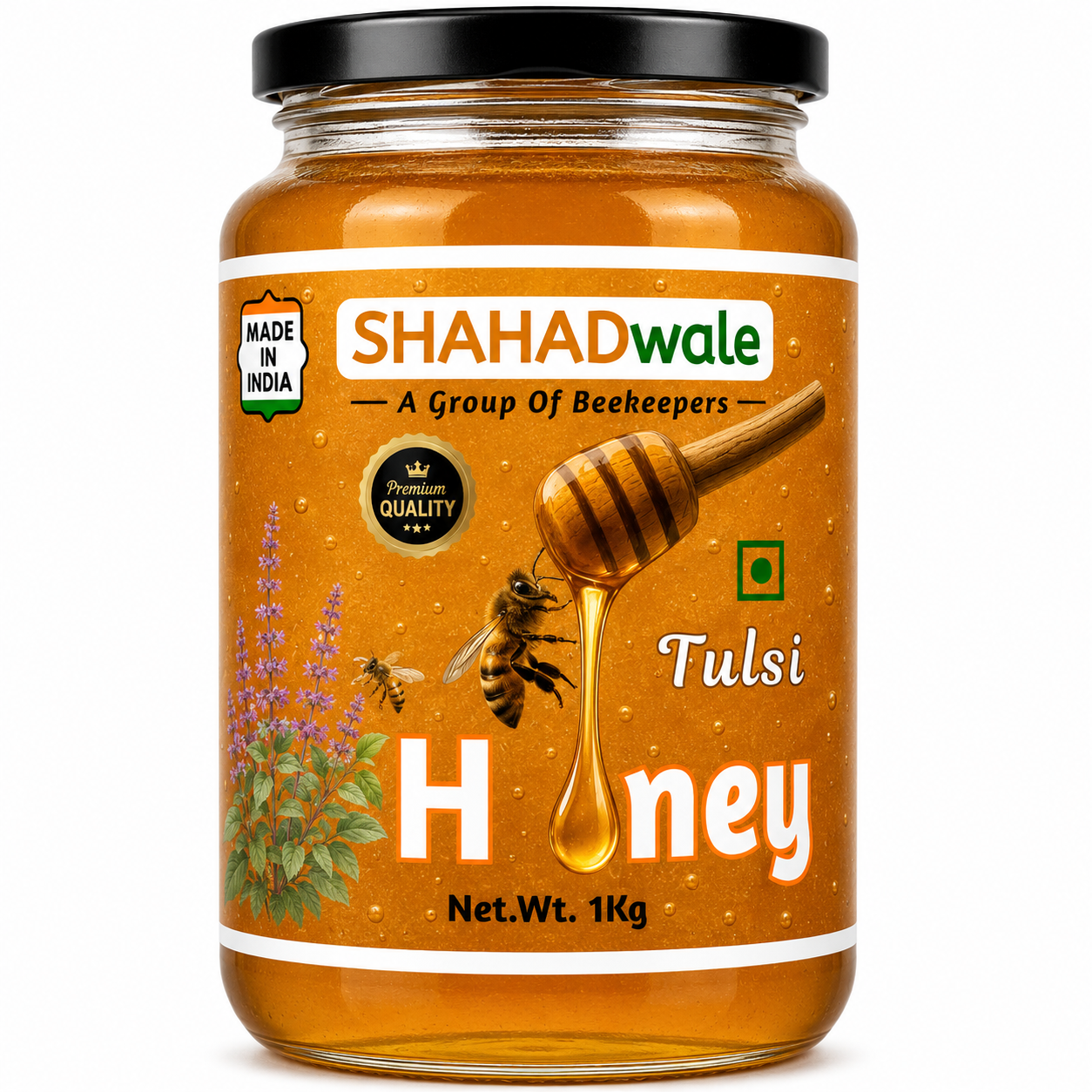
What's the Average Price of Pure Honey in India?
Pure honey in India retails between roughly ₹200 and ₹2,500 per kg, depending on floral source, processing, and market segment. Most mainstream branded honey sells in the ₹300–₹550 per kg range; raw and single-floral varieties typically start around ₹700.
| Category | Approx. Retail Range (per kg) |
|---|---|
| Bulk / wholesale supplier rates | ₹120 – ₹300 |
| Economy branded honey | ₹220 – ₹400 |
| Mass-market branded honey | ₹300 – ₹550 |
| Raw / unprocessed honey | ₹600 – ₹1,300 |
| Single-floral honey | ₹800 – ₹1,600 |
| Organic certified honey | ₹1,000 – ₹1,800 |
| Artisanal / small-batch honey | ₹1,200 – ₹2,500 |
All figures are approximate retail ranges observed in July 2026 across e-commerce, quick-commerce, and trade platforms. Prices vary by seller, city, and ongoing promotions.
Why Does Honey Cost More (or Less)?
Eight variables account for most of the price spread: floral source (scarce blooms cost more), season (honey is a harvest product), geography (migratory beekeeping and remote regions add logistics), production scale (large processors negotiate far lower per-kg costs), processing (heat treatment and fine filtration are cheap at volume; small-batch raw honey costs ~₹800–₹1,500/kg to produce), packaging (glass costs several times a squeeze bottle), certification (NPOP organic + NMR testing are optional and expensive), and transportation (honey is heavy and dense).
Price by Honey Type
Floral source is the clearest single predictor of price.
| Honey Type | Approx. Price (per kg) | Why It's Priced This Way |
|---|---|---|
| Mustard | ₹350 – ₹600 | High-yield winter crop, widely available |
| Multiflora | ₹220 – ₹550 | Blended from multiple blooms; steady supply |
| Eucalyptus | ₹450 – ₹750 | Reliable yield, plantation-dependent |
| Litchi | ₹700 – ₹1,200 | Very short bloom window (2–3 weeks) |
| Acacia | ₹800 – ₹1,400 | Slow crystallising, limited plantation belts |
| Jamun | ₹800 – ₹1,500 | Short season, perceived medicinal value |
| Sundarban / Mangrove | ₹500 – ₹1,300 | Restricted collection zones, strong brand demand |
| Forest / Wild | ₹900 – ₹1,800 | Difficult access, tribal collection, low yields |
| Raw (any floral) | ₹600 – ₹1,300 | Minimal processing, small batches |
| Organic certified | ₹1,000 – ₹1,800 | Certification, audit trails, restricted zones |
Type-wise ranges are indicative — two jars labelled the same variety can differ substantially. The pattern holds throughout: the shorter the bloom and the harder the terrain, the higher the price. For how these varieties differ in taste and use, see our guide on types of honey in India.
Price by Pack Size
Smaller jars carry disproportionately high packaging and handling costs.
| Pack Size | Typical Price Range | Effective Cost per kg |
|---|---|---|
| 100 g | ₹60 – ₹180 | ₹600 – ₹1,800 |
| 250 g | ₹110 – ₹380 | ₹440 – ₹1,520 |
| 400–500 g | ₹180 – ₹650 | ₹400 – ₹1,300 |
| 1 kg | ₹280 – ₹1,400 | ₹280 – ₹1,400 |
| 2 kg | ₹600 – ₹2,200 | ₹300 – ₹1,100 |
A 100 g jar can cost close to 2× as much per kilogram as the same brand's 1 kg pack. That said, bulk isn't automatically smarter — buy the size you'll actually finish in six to nine months. The one-line rule: price ÷ grams × 1,000 = cost per kg. Run that on every jar before comparing, and most “discount” claims resolve themselves quickly.
Seasonal Buying Calendar
| Season | Peak Harvest | Price Behaviour | Buying Note |
|---|---|---|---|
| Nov–Feb (Winter) | Mustard, multiflora | Lowest of the year | Best window for bulk and everyday honey |
| Mar–Apr (Spring) | Litchi, acacia | Firm to moderate | Buy litchi close to harvest for peak aroma |
| May–Jun (Summer) | Jamun, eucalyptus | Higher | Short window, expect variety-specific premiums |
| Jul–Oct (Monsoon) | Forest, wild, mangrove | Highest, least predictable | Access constraints; availability varies |
Seasonal price behaviour is a general pattern, not a guarantee. Retail prices don't track harvest as tightly as wholesale, since brands buy ahead and hold stock. The calendar is more reliable for judging freshness than for timing a bargain.
Price by Market Segment
Brand names tell you less than segment does.
| Segment | Price Range (per kg) | What Defines It |
|---|---|---|
| Bulk / trade | ₹120 – ₹300 | Wholesale drums, no retail packaging |
| Economy | ₹220 – ₹400 | Heavily discounted, plastic packaging, minimal traceability |
| Mass-market | ₹300 – ₹550 | National distribution, FSSAI compliant, standard filtration |
| Premium | ₹600 – ₹1,200 | Better sourcing disclosure, glass packaging, some batch testing |
| Single-floral | ₹800 – ₹1,600 | Verified single bloom, seasonal availability |
| Organic certified | ₹1,000 – ₹1,800 | NPOP/third-party certified, residue testing |
| Artisanal / small-batch | ₹1,200 – ₹2,500 | Named apiary, limited runs, raw or minimally processed |
Segment bands overlap in practice; heavy discounting can temporarily push products below their normal band. For how individual labels position within these bands, see best honey brand in India.
Price by Sales Channel
| Channel | Typical Price (1 kg) | Trade-offs |
|---|---|---|
| Brand website (D2C) | ₹400 – ₹1,400 | Freshest stock & test details; shipping charged separately |
| Amazon / Flipkart | ₹280 – ₹1,300 | Widest selection; third-party sellers, variable storage |
| BigBasket | ₹290 – ₹550 | Reliable mass-market; limited premium options |
| Blinkit / Zepto / Instamart | ₹219 – ₹520 | Fastest delivery, aggressive discounts; near-zero raw/organic range |
| Local kirana / supermarket | ₹300 – ₹550 | No shipping, physical label inspection; no premium tier |
| Trade directories / bulk | ₹120 – ₹300 | Lowest per-kg cost; MOQs, no retail packaging |
Channel prices are the most volatile figures in this report — verify before purchasing. Quick-commerce apps compete hardest on the mass-market tier and barely stock anything above it. If you're shopping for genuine single-origin honey, the ₹219 quick-commerce jar isn't a cheaper version of it — it's a different product.
Honey Price by State
| State / Region | Typical Retail Range (1 kg) | What Drives It |
|---|---|---|
| Punjab & Haryana | ₹280 – ₹480 | Core mustard belt; short supply chains |
| Uttar Pradesh & Bihar | ₹300 – ₹520 | Major mustard and litchi production |
| West Bengal | ₹320 – ₹600 | Sundarban access, restricted zones push specialty higher |
| Maharashtra & Gujarat | ₹350 – ₹600 | Large urban demand, higher freight-in |
| Karnataka & Tamil Nadu | ₹350 – ₹650 | Southern forest belts; organic/artisanal presence |
| Uttarakhand & Himachal | ₹400 – ₹900 | Himalayan single-floral sourcing; low volumes |
| North-East states | ₹400 – ₹1,000 | Remote wild/forest honey; high transport cost |
Indicative retail bands, not government-notified rates. National brands price fairly uniformly across cities; the variation is driven mainly by regional sellers.
Cheap Honey vs Premium Honey
The honest question isn't “which is purer” — both can meet FSSAI standards. The question is what the extra money buys.
| Attribute | Economy Honey | Premium Honey |
|---|---|---|
| Sourcing disclosure | Rarely stated | Region, apiary, or floral source named |
| Processing | Heat-treated, fine-filtered | Raw or minimally filtered |
| Batch traceability | Usually absent | Batch number and harvest date printed |
| Lab testing | Basic compliance only | Additional adulteration / NMR testing |
| Packaging | Plastic squeeze bottles | Glass jars, sealed |
Premium pricing buys information and restraint — knowing where the honey came from, and knowing less was done to it. It does not automatically buy better taste or guarantee purity; testing and disclosure do. To evaluate a jar yourself, our guide on how to identify pure honey walks through the checks.
How to Judge Value Instead of Price
| Question | What a Good Answer Looks Like |
|---|---|
| Is the FSSAI licence number printed? | Yes — 14-digit number, clearly visible |
| Is the floral source named? | Specific bloom, or honestly labelled “multiflora” |
| Is a batch number present? | Yes — with packing and harvest dates |
| Is the origin region stated? | District, state, or named apiary — not just “India” |
| Is processing described? | “Raw,” “unheated,” or filtration method disclosed |
| Does the price match the claim? | A ₹250/kg jar claiming “raw organic forest honey” doesn't add up |
Claims that are cheap to print but expensive to fulfil are the clearest warning sign. If genuine small-batch raw honey costs ₹800–₹1,500/kg simply to produce, a retail price well below that cannot describe the same product.
Which Honey Fits Which Buyer
| Buyer Profile | Sensible Choice | Approx. Budget |
|---|---|---|
| Everyday household use | Multiflora or mustard, 1 kg | ₹300 – ₹600 |
| Fitness & daily wellness | Raw multiflora or raw mustard | ₹600 – ₹1,000 |
| Taste & culinary use | Single-floral (acacia, litchi) | ₹800 – ₹1,600 |
| Gifting | Single-floral or artisanal in glass | ₹1,000 – ₹2,500 |
| Organic preference | NPOP-certified organic | ₹1,000 – ₹1,800 |
| Bulk household / small business | 2 kg packs, multiflora | ₹300 – ₹500 |
The most common mismatch: buyers paying single-floral prices for honey they'll pour into hot tea every morning — where the aroma won't survive the cup. For what minimal processing actually offers, see raw honey benefits.
Price Trends & Future Outlook
| Year | Approx. Commodity Benchmark (per kg) | Market Context |
|---|---|---|
| 2022 | ~₹120 – ₹130 | Post-pandemic demand recovery; adulteration scrutiny intensifies |
| 2023 | ~₹128 – ₹138 | Export price volatility; compliance costs rising |
| 2024 | ~₹135 – ₹145 | Production up 39% YoY to 146,000 tonnes; exports up 5.2% |
| 2025 | ~₹145 – ₹155 | Steady rise in packaging and certification costs |
| July 2026 | ~₹157 | Up roughly 9% year-on-year |
These are bulk commodity benchmarks, not retail shelf prices. The commodity line has risen modestly (~25–30% over five years), but retail prices have risen faster at the premium end because certification, testing, and packaging costs climbed more sharply. Three forces shape what's next: tighter adulteration scrutiny, export demand, and climate variability. The likely direction is a widening gap — economy honey staying cheap, certified/traceable honey getting more expensive, and the middle thinning out.
Quick Price Summary
| What You're Buying | Expect to Pay (per kg) |
|---|---|
| Everyday branded honey | ₹300 – ₹550 |
| Discounted quick-commerce honey | ₹219 – ₹400 |
| Raw / unprocessed honey | ₹600 – ₹1,300 |
| Single-floral honey | ₹800 – ₹1,600 |
| Certified organic honey | ₹1,000 – ₹1,800 |
| Artisanal small-batch honey | ₹1,200 – ₹2,500 |
Frequently Asked Questions
Price figures in these answers reflect market conditions in July 2026 and are approximate. They are not offers or quotations.
What is the price of pure honey in India?
Pure honey typically retails between ₹200 and ₹2,500 per kg. Most mainstream branded honey falls in ₹300–₹550 per kg, while raw and single-floral varieties usually start around ₹700.
What is the pure honey price per kg?
Roughly ₹280–₹1,400 per kg for most retail honey. Bulk supplier rates start near ₹120–₹150, and artisanal or organic honey can exceed ₹1,800.
Why is pure honey expensive?
Limited bloom windows, migratory beekeeping logistics, minimal processing, lab testing, certification, and small batch sizes all raise cost. Small-batch raw honey alone costs around ₹800–₹1,500 per kg to produce.
What is the pure honey 1kg price in India?
Approximately ₹280 to ₹1,400. Mass-market 1 kg jars commonly list between ₹297 and ₹515; raw, forest, and organic 1 kg packs range from about ₹800 to ₹1,400.
What is the honey price for 500g?
Typically ₹180 to ₹650, or an effective ₹400–₹1,300 per kg — slightly higher per gram than 1 kg packs.
What is raw honey price in India?
Raw honey generally retails at ₹600–₹1,300 per kg. It skips heat treatment and fine filtration, which lowers yield efficiency and raises handling cost.
Is expensive honey always better?
No. Price reflects cost structure, not guaranteed quality. A moderately priced honey with clear labelling and test disclosure often offers better value than an unverified premium product.
Why is forest honey more expensive than mustard honey?
Forest honey involves difficult terrain, unpredictable yields, and remote collection. Mustard honey comes from high-yield, accessible winter crops.
Which honey offers the best value for money?
Multiflora and mustard honey deliver the lowest cost per kilogram for everyday use. For specific flavour, single-floral varieties justify their premium.
Is 1kg honey cheaper than two 500g jars?
Almost always. Packaging and handling costs don't scale down proportionally, so smaller packs cost meaningfully more per kilogram.
Does organic honey cost more?
Yes. Organic certified honey generally runs ₹1,000–₹1,800 per kg — the premium covers certification audits and residue testing rather than a compositional difference.
Why do honey prices vary between brands?
Differences come from sourcing scale, processing method, packaging, testing depth, and distribution model — not from the honey being a fundamentally different substance.
Is cheap honey fake?
Not necessarily. Low price often reflects bulk sourcing and heavy processing rather than adulteration. But very low prices combined with premium claims like “raw organic forest honey” warrant scepticism.
Do honey prices change seasonally?
Yes. Prices for specific floral varieties fluctuate with harvest cycles. Litchi, jamun, and acacia honey are most affected because their bloom windows are short.
How can I tell if a honey's price is fair?
Compare the price against what's disclosed on the label — floral source, region, batch number, processing, and testing. If the claims are premium but the price is economy, the numbers don't reconcile.
Where is honey cheapest in India — online or in stores?
Quick-commerce and marketplaces usually offer the lowest prices on mass-market brands. Raw, organic, and single-floral honey is generally cheapest on brand-owned websites, where the range is widest.
Which month is best to buy honey in India?
November to February typically sees the largest supply (mustard harvest) and the lowest prices for everyday multiflora. Litchi and jamun are freshest shortly after their own blooms.
Which honey is best for daily household use?
Multiflora or mustard honey in a 1 kg pack offers the best cost-per-kilogram. Reserve single-floral varieties for uses where the flavour is actually noticeable.
Does honey price vary by state in India?
Somewhat. National brands price fairly uniformly, but regional sellers vary — production-belt states like Punjab and UP generally see lower everyday prices, while remote-sourcing regions carry higher prices for specialty varieties.
Editor's Market Outlook
In honey, price is a proxy for effort, not for purity. The commodity itself moves at around ₹157 per kg; everything above that is sourcing choice, processing restraint, testing, packaging, and distribution. The cheapest jar isn't automatically adulterated — it's usually just honey bought in bulk, heated, filtered hard, and packed at volume. The expensive jar isn't automatically better either: a high price with no batch number, no origin, and no test reference is just a high price. What separates good value from bad is disclosure. The most useful shift a buyer can make in 2026 isn't spending more — it's reading the back of the jar before looking at the price on the front.
Explore the SHAHADwale Honey Collection →
References & Data Sources
- Selina Wamucii — India Natural Honey Price Insights (export unit value, production/export benchmarks)
- Tridge — Honey Price in India (export/import price volatility)
- Observed retail listings (July 2026): Amazon India, Flipkart, BigBasket, Blinkit; IndiaMART & TradeIndia (bulk rates)
- FSSAI — Food Safety and Standards (Food Products Standards) Regulations: Honey
- APEDA — export data; National Bee Board — production capacity
- Codex Alimentarius — Standard for Honey (CXS 12-1981)